



ADDRESS
Blog/2026.06.03
Buyers of transparent LED displays start with visual performance — image quality and transparency. But their criteria no longer stop there. Installation convenience has become a serious purchasing consideration, and in high-frequency build scenarios such as stage rental and live events, how fast a display goes up shapes both project cost and the crew's experience on site. The industry usually frames installation convenience around quick-lock structures, modular design, and serviceability. A more basic property gets less attention but matters just as much: the weight of each cabinet.
A lighter cabinet has obvious, practical appeal. It is easier to move, faster to install, and less costly in labor. Those gains grow in the most demanding conditions — overhead rigging, or jobs that are assembled and taken down again and again. So, it is no surprise that weight has become something manufacturers compete on, each release advertising a lower figure than the last.
Does that make a transparent LED display better the lighter it gets? The honest answer is that weight alone settles very little. Two cabinets with the same weight per square meter can demand very different labor once a crew has to lift, align, and secure them on site. The relevant question for outdoor projects is therefore not which outdoor transparent LED display is lightest, but whether the weight race has addressed the operational pain points that drive installation cost and project risk.
Weight per square is defined simply: the net weight of a single panel divided by its display area. It is a density value and should be read as one.
|
Weight per Square Meter Informs |
Weight per Square Meter Does Not Represent |
|
Total transport load across a shipment |
The weight and bulk of an individual packaged unit |
|
Load at each hanging and rigging point |
The handling posture imposed on the field crew |
|
Structural selection for the support system |
Assembly complexity, once a panel is in hand |
Feedback from installation sites repeatedly identifies the same discrepancy between specification and execution on the transparent LED screen. Two assumptions are responsible for the majority of it.
Misconception 1: A Lower Weight Value Indicates Reduced Installation Effort
Intuitively, a lighter panel should be easier to lift and position, which is why this reading dominates procurement discussions. On site, however, the effort a panel demands is shaped less by its mass than by two properties the weight figure does not capture: its volume and its center of gravity.
The result: two panels of identical weight but differing volume and balance can impose markedly different handling demands, a distinction the density value does not convey.
Misconception 2: A Light Specification Indicates Single-Technician Installation
If a single panel is light enough for one person to lift, it is tempting to conclude that one person can install it. Lifting, however, is only part of the task. Whether a single technician can complete an installation depends on the assembly process itself, and on two factors the weight figure leaves unstated:
This carries directly into project economics. For a transparent rental LED display installed and dismantled under compressed schedules with limited crews, the number of steps a single technician can complete unassisted is a principal determinant of labor hours and turnaround time.
Because neither assumption withstands field conditions, the relevant question is which parameters should be evaluated in place of the density figure. Experienced specifiers have responded accordingly, assessing a transparent LED screen against three operational criteria:
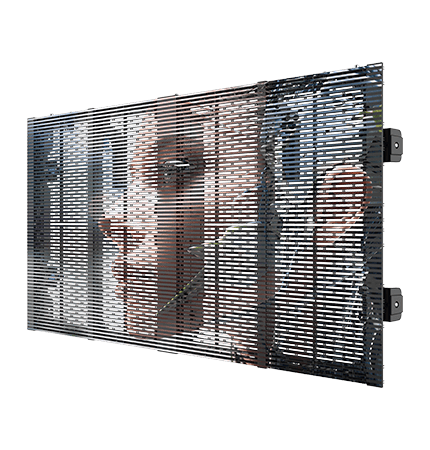
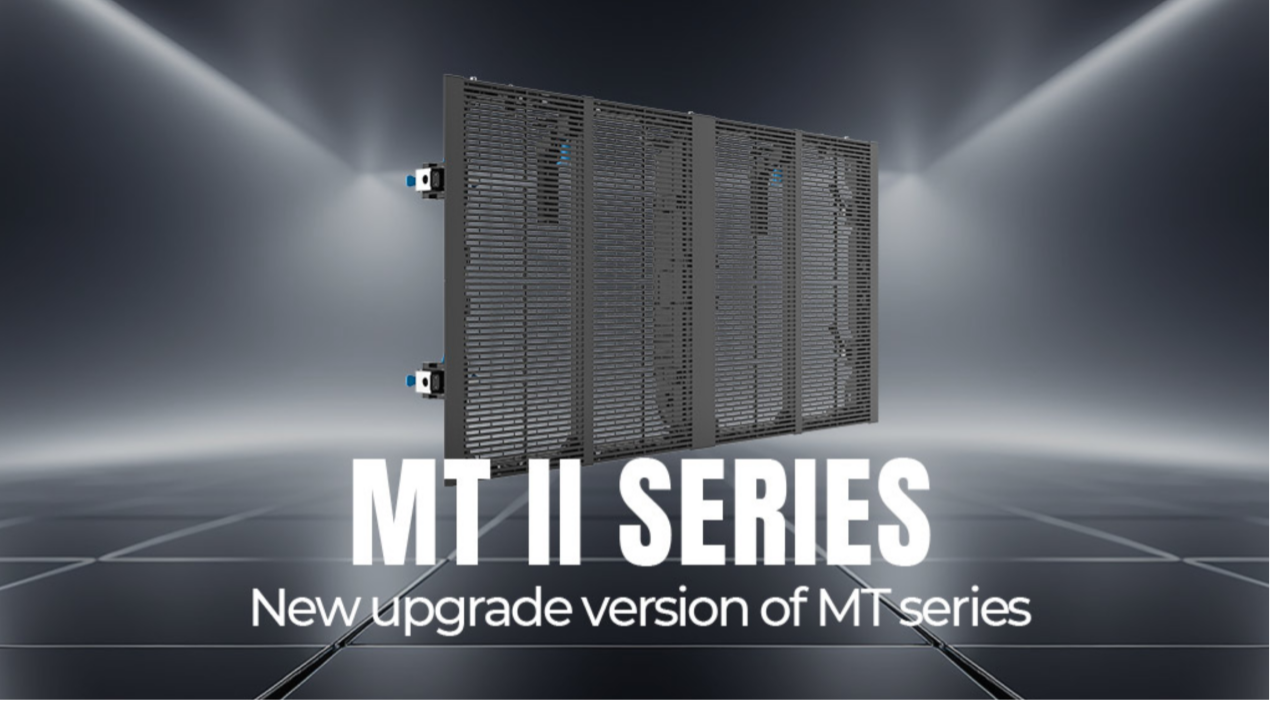
As an experienced transparent LED screen manufacturer, YES TECH did not pursue the lowest weight value on a specification table but sought to render the product convenient and controllable to deploy and maintain.
That objective redefined the unit of optimization: the MT II is not refined at the level of the individual module, but upgraded as a complete MT framework, in which structural strength, transparency, weight, and operational convenience are engineered as a unified system rather than as competing trade-offs.
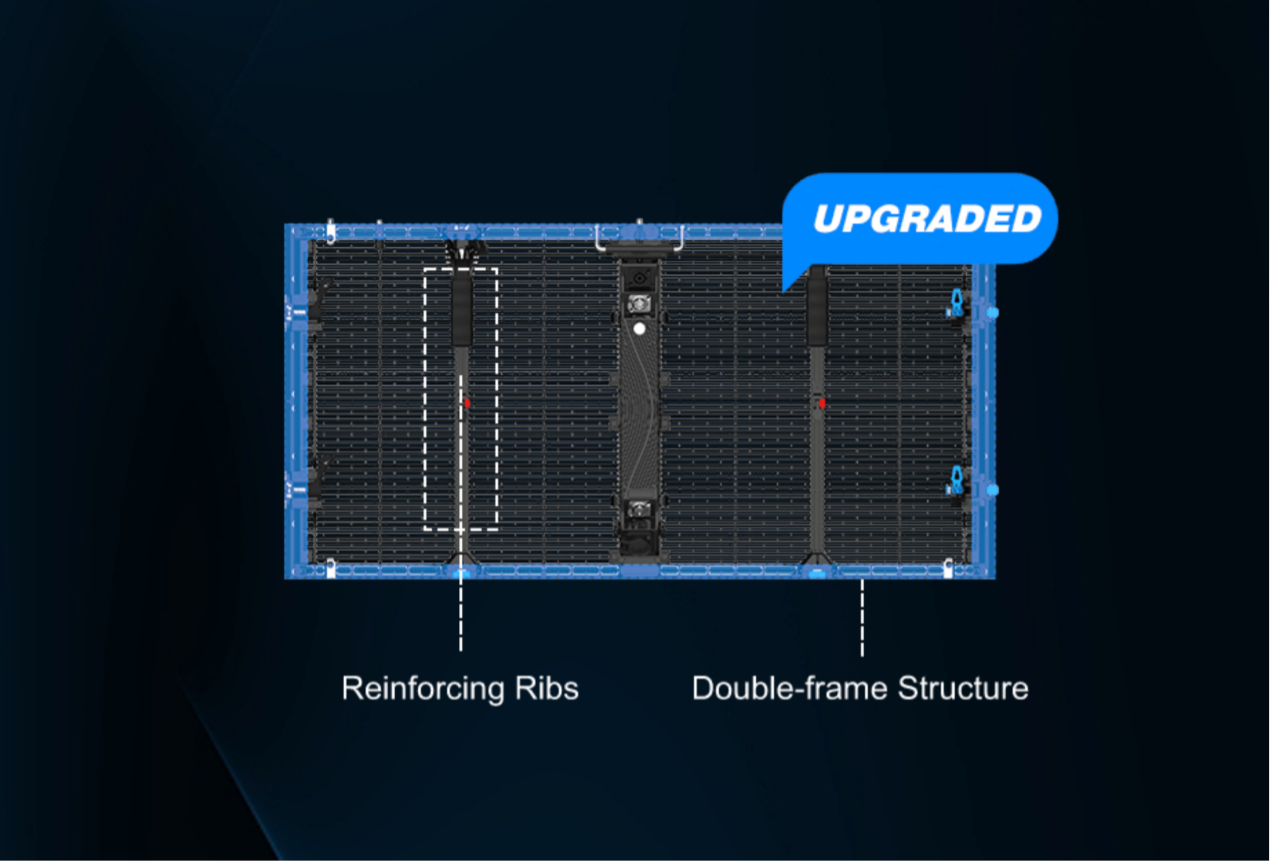
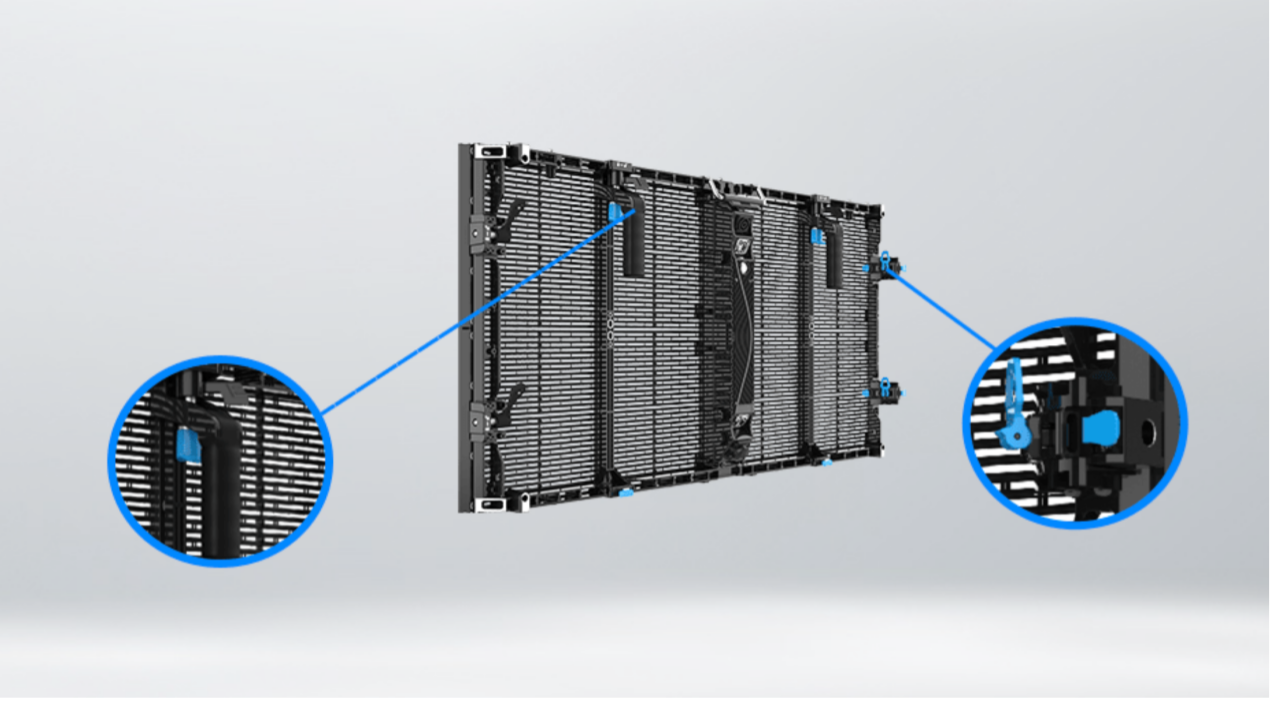
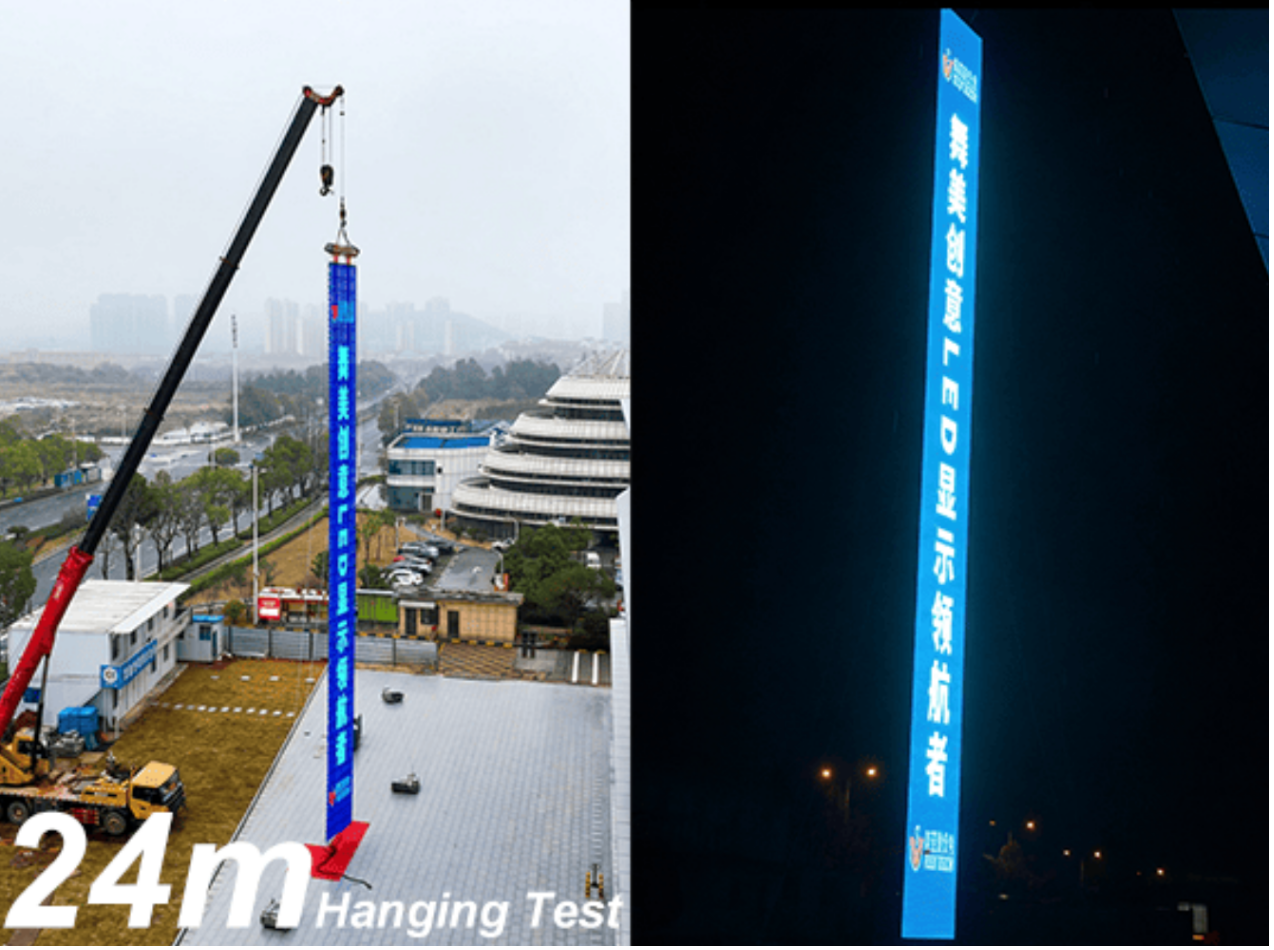
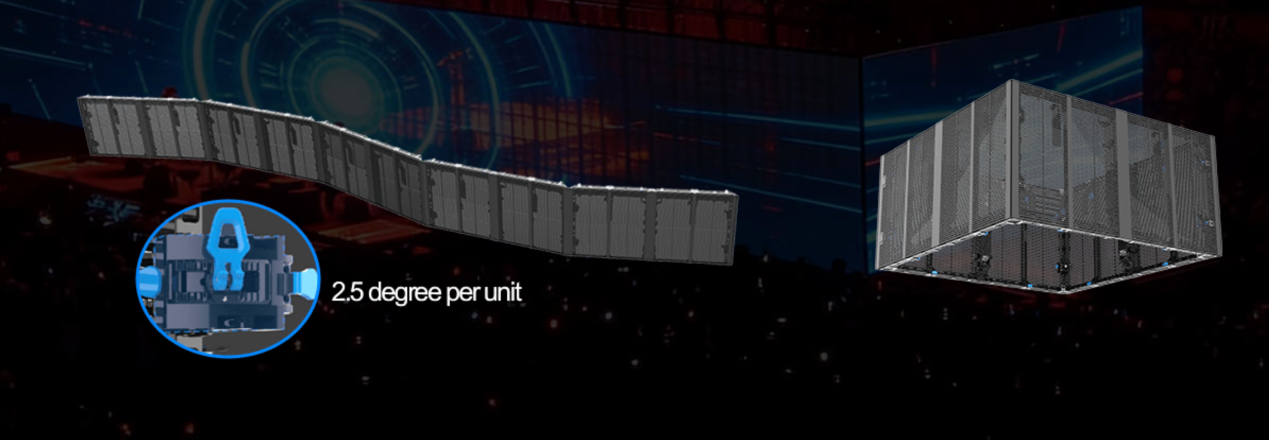
2. Form-Factor Versatility: The MT II retains both right-angle and curved splicing, inner and outer 90° joints for square-column configurations, high-precision 15° inner and outer arcs for curved surfaces, and half-cabinet staggered splicing, so creative geometry is not constrained by the structure.
3. Visual Performance: Transparency reaches 50% or higher, and the refresh rate extends to 7680 Hz. An optimized lamp-board and IC layout maintains consistent color and balances transparency against image quality, meeting the requirements of high-standard stage and scenographic display.
Installation Flexibility: Top-beam and bottom-beam mounting are interchangeable, which reduces procurement and maintenance cost and improves assembly and disassembly efficiency.
A lighter transparent LED display is not necessarily a superior one. Weight per square meter records a single specification value; it does not account for the labor required to move, align, and service the screen on site, and that labor is the principal driver of total installed cost.
The YES TECH MT II is engineered to this standard. Rather than minimizing weight in isolation, YES TECH integrates transparency, structural strength, and operational efficiency into a single balanced system — delivering performance that holds not only on the specification sheet but throughout the full deployment and service cycle.
Contact YES TECH to get more information about the outdoor transparent LED display!


+86-(0)731-84539619


Hunan Yestech Optoelectronic Co., Ltd. Terms of Service Privacy Policy Powered by szweb


