



ADDRESS
Blog/2026.07.23
In recent years, the visual landscape of outdoor festivals and live performances has undergone a major transformation. The era when a massive, flat LED wall simply served as the background of a stage is gradually fading. In 2026, festival stages are no longer designed as a “screen behind the performers.” Instead, they are evolving into dynamic environments where digital visuals, lighting, mechanical structures, and physical spaces work together to create immersive experiences.
As audiences become increasingly engaged with large-scale visual productions, stage designers and production teams are exploring new ways to create depth, interaction, and flexibility. Modern festival stages are expected to deliver more than high-resolution content — they need to become part of the overall performance environment.
Based on the latest developments in global festival productions and touring stage design, three major trends are shaping the future of festival stages in 2026. These trends are ultimately driving the industry toward a key visual solution: transparent LED displays.
Trend 1: From Flat LED Walls to Multi-Layered Spatial Experiences
For years, traditional LED video walls have dominated festival stages by providing large-scale visual backgrounds. However, as stage design continues to evolve, designers are moving beyond a single flat display surface and creating more dimensional visual environments.
Breaking the Boundaries of 2D Stage Design
Modern festival stages increasingly adopt multi-layered layouts that combine foreground, middle ground, and background elements. By positioning visual displays at different depths across the stage, designers can create stronger perspective and spatial effects, making digital content feel more integrated with the physical environment. Instead of presenting visuals on one large surface, the stage becomes a three-dimensional canvas where performers, lighting, video content, and stage structures interact with each other.
This approach creates a more immersive audience experience. Visual elements can appear closer, deeper, or even integrated into the surrounding stage architecture, allowing audiences to feel surrounded by the performance rather than simply watching a screen.
Creating an Open and Breathable Stage Atmosphere
Another important shift is the move away from closed stage structures. Traditional solid LED walls often create a visual barrier between the audience and the stage environment. They separate digital content from lighting effects, scenery, and the physical performance space.
In contrast, modern stage design increasingly focuses on openness and transparency. Designers want audiences to see beyond the screen — including lighting beams, special effects, stage structures, and surrounding environments — while still enjoying high-quality visual content. This demand for depth and openness is one of the key reasons transparent LED displays are gaining attention in festival productions.
Trend 2: Seamless Integration of Physical Lighting and Digital Visuals
In large-scale live events, LED screens and lighting systems have historically competed for space. A traditional solid LED wall provides powerful visual impact but can block lighting fixtures, lasers, and stage effects positioned behind it.
When LED and Lighting Become One Visual System
The future of festival stage design is moving toward a more integrated approach, where LED displays are no longer isolated video surfaces but part of the complete lighting environment.
Transparent LED technology enables lighting fixtures to be installed behind the display while maintaining visibility through the screen structure. During video playback, the audience sees vivid digital content. When lighting effects are activated, beams and effects can pass through the display, creating a layered combination of video, light, and atmosphere. This creates a unique visual experience where the screen does not block the stage — it enhances it.
For lighting designers and visual artists, this provides greater creative freedom. They can combine LED content, lasers, moving lights, and special effects into a unified visual system, creating stage experiences that are impossible with traditional solid displays.
Trend 3: Lightweight, Efficient, and Sustainable Stage Production
Beyond creativity, modern festival production is also becoming more focused on efficiency, safety, and sustainability. Large-scale outdoor events often involve complex logistics, including transportation, installation, structural requirements, and repeated touring schedules. For production companies and rental providers, reducing setup time and improving operational efficiency have become critical priorities.
Lower Wind Load and Safer Outdoor Applications
Outdoor festival stages face challenging environmental conditions, especially in coastal areas and open venues where wind resistance is a major consideration. Traditional solid LED structures create large surface areas that can increase wind pressure on stage structures. As a result, stage engineers must carefully consider structural reinforcement, safety requirements, and installation limitations.
Transparent LED displays provide a different approach. Their open structure allows airflow to pass through the display surface, reducing wind resistance compared with fully enclosed screens. This makes them particularly suitable for outdoor environments where both creative flexibility and structural safety are important.
Faster Installation for Touring Productions
The touring industry continues to demand faster setup, easier transportation, and more efficient workflows. For rental companies, every improvement in cabinet weight, installation speed, and transportation efficiency can directly influence project costs and operational flexibility.
Modern rental LED solutions are therefore moving toward lightweight cabinet designs, simplified installation systems, and stronger mechanical structures that can support frequent assembly and transportation. These requirements are reshaping how festival production teams evaluate LED displays — performance is no longer measured only by image quality, but also by efficiency throughout the entire production process.
The Rise of Transparent LED in Festival Stage Design
When these three trends are considered together — multi-layered stage experiences, integration between lighting and visuals, and lightweight outdoor production — one thing becomes clear: traditional solid LED displays cannot always meet the evolving demands of modern festival stages. Transparent LED displays are emerging as a solution that connects digital content with the physical stage environment.
The value of transparent LED is not simply that audiences can see through the display. Its real advantage is that it allows designers to create more open, flexible, and immersive stage environments.
With transparent LED, digital visuals can coexist with:lighting systems behind the screen;stage structures and scenic elements; smoke, lasers, and special effects; architectural or natural backgrounds. The display becomes part of the stage rather than a separate visual barrier.
Why Rental Transparent LED Is Different
It is important to understand that not all transparent LED solutions are designed for festival and touring applications. Some transparent displays are developed for commercial environments such as retail windows, architectural installations, and permanent building applications. Others focus on creative installations where flexibility and artistic shapes are the primary requirements.
However, large-scale festivals and touring productions require a different type of solution: rental transparent LED displays. Designed specifically for live events, rental transparent LED systems need to balance several factors: fast installation and dismantling; lightweight transportation; outdoor reliability; high brightness performance; mechanical strength for hanging and creative structures; long-duration operation during multi-day events. For production teams, the ideal transparent LED solution is not only visually impressive — it must also fit the demanding workflow of professional event production. As transparent LED technology continues to mature, it is moving beyond a special-effect option and becoming an essential tool for modern festival stage design.
How MAir Brings These Festival Stage Trends to Life
The evolution of festival stage design is creating new expectations for LED display solutions. Modern productions need more than high-resolution visuals — they require displays that can enhance stage depth, integrate with lighting systems, support creative structures, and perform reliably in demanding outdoor environments.
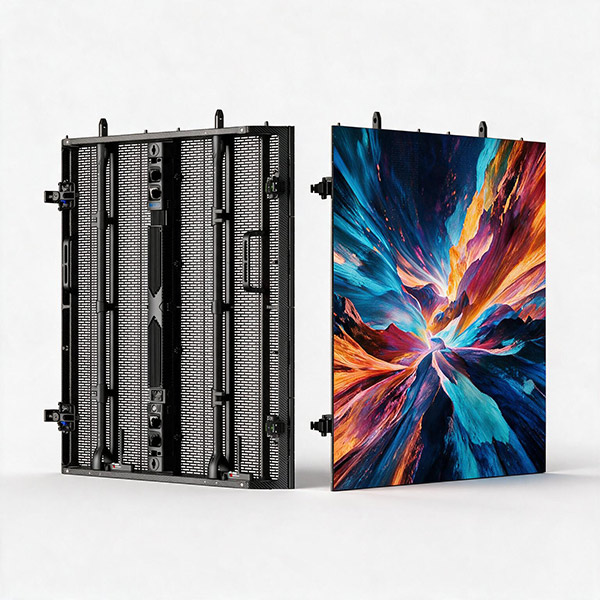
Designed for touring and outdoor live events, YES TECH MAir transparent LED display addresses these needs by combining visual openness, lightweight engineering, and structural flexibility. It enables production teams to create immersive stage environments where digital content becomes part of the overall performance space rather than a traditional visual backdrop.
Creating Open and Layered Stage Experiences
One of the defining trends in modern festival design is the move toward more open and dimensional stage structures. Instead of relying on a single large LED wall, designers are creating layered environments where screens, lighting, performers, and stage architecture work together. MAir supports this creative approach with its transparent design and high visual integration. With up to 47% transparency, the display maintains the depth of the stage while allowing lighting effects, structures, and scenic elements behind the screen to remain visible. This helps designers achieve a more breathable stage atmosphere while keeping impactful visual content.
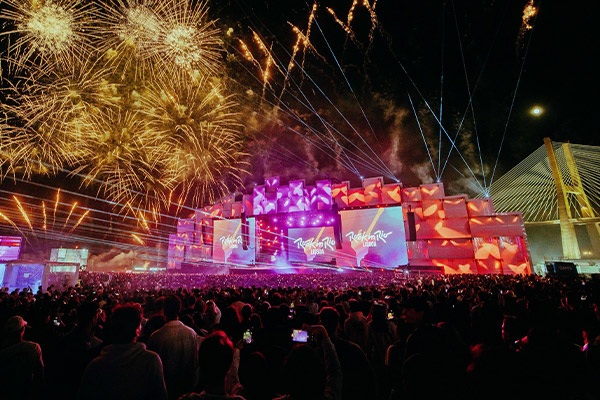
At Rock in Rio Lisbon 2026, MAir P7.8 was integrated into a large-scale festival stage design, contributing to a more open and dynamic visual experience. The stage combined large LED surfaces with creative cube-shaped structures, demonstrating how transparent LED can add depth and flexibility to modern festival environments.
Enabling Creative Stage Structures for Touring Productions
As festival stages become more creative, LED systems need to support more than traditional flat installations. Production teams are increasingly looking for solutions that can adapt to unique stage concepts, including corners, geometric structures, and three-dimensional configurations. MAir was designed with this demand in mind. Its specially developed cabinet structure supports creative installations such as 90° corner designs and cube-shaped stage elements, allowing designers to explore more possibilities beyond conventional LED walls. At Rock in Rio 2026, the MAir platform helped create a visually distinctive central stage structure while maintaining the clean and lightweight appearance required for a major touring production.
Built for Fast, Reliable Outdoor Production
For touring and festival applications, creativity must be balanced with practical performance. Large outdoor productions require LED systems that are easy to transport, efficient to install, and reliable throughout long-duration events. MAir features a lightweight cabinet design with a premium carbon-fiber appearance, helping reduce installation complexity while maintaining structural strength. Its rental-oriented design supports efficient setup workflows, making it suitable for large-scale productions where time and labor efficiency are critical.
For outdoor environments, MAir is engineered with IP65 protection, a reinforced air-frame structure, and the ability to withstand wind speeds of up to 20 m/s. The system also supports hanging applications up to 25 meters, providing production teams with greater flexibility when designing large festival stages.
As festival stages continue to evolve, the demand for more immersive, open, and flexible visual solutions will only continue to grow. Transparent LED is becoming an important part of this transformation, enabling designers to create stages where visuals, lighting, and physical environments work together seamlessly. With its lightweight design, creative installation flexibility, and reliable outdoor performance, YES TECH MAir is built to support the next generation of festival and touring productions. Explore how MAir can help bring your next stage vision to life.


+86-(0)731-84539619


Hunan Yestech Optoelectronic Co., Ltd. Terms of Service Privacy Policy Powered by szweb


