



ADDRESS
Blog/2026.07.27
"Everyone has been super happy with the product so far. Super easy to assemble and not much time."
That simple comment from the LED display solution team at Fun Fest 2026 reflects what every production company is looking for today. The best LED display is not only the one that delivers stunning visuals—it is the one that helps crews work faster, designers create more freely, and organizers run every show with confidence.
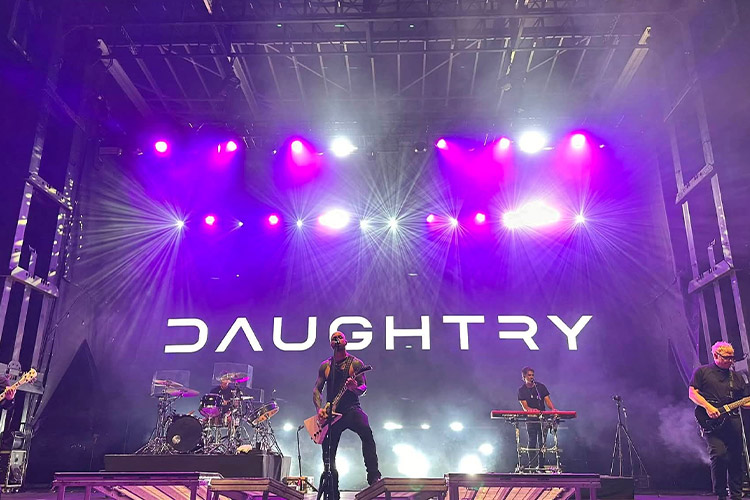
Over the past two decades, the live entertainment industry has changed dramatically. Festival stages have become larger, concert productions more ambitious, and touring schedules tighter than ever before. Audiences no longer expect a stage with a single rectangular video wall. They expect immersive environments where LED displays, lighting, stage architecture, and visual content work together to create unforgettable experiences.
As these expectations have evolved, so have LED displays. Every generation of touring technology has been developed to solve a new production challenge. From reliable rental platforms built for large-scale events to creative display systems that expanded stage design possibilities, and now to transparent LED solutions that redefine the relationship between video and physical space, the industry's evolution has never been about replacing what came before. Instead, it has been about giving production teams better tools for the next generation of live entertainment.
For more than 25 years, YES TECH has grown alongside this evolution. Each product platform has reflected the changing needs of rental companies, production designers, and touring professionals. Rather than following trends, the company has focused on solving practical challenges—from reliability and efficiency to creative flexibility and outdoor performance. That journey has ultimately led to MAir, a transparent LED platform designed specifically for modern touring productions.
The Evolution of Better Stage Solutions
In the early years of large-scale touring, reliability was the industry's highest priority. Production companies needed LED displays that could survive constant transportation, repeated assembly, and demanding event schedules while maintaining consistent image quality. Fast installation, structural stability, and dependable performance mattered far more than creative stage shapes.
This demand led to the development of professional rental LED platforms such as the YES TECH MG Series. Built for concerts, festivals, sporting events, television productions, and corporate events, MG established a reputation for durability, efficiency, and dependable performance. More importantly, it introduced a design philosophy that continues to define YES TECH products today: technology should simplify production rather than complicate it. As live entertainment entered a new era, however, reliability alone was no longer enough.
Stage design gradually became an essential part of storytelling. Creative directors wanted stages that reflected an artist's identity rather than relying on a standard rectangular screen. Designers began experimenting with suspended displays, three-dimensional installations, curved structures, and modular stage elements that transformed LED displays into architectural features instead of simple video walls.
To support this creative shift, YES TECH expanded its rental portfolio with products developed for increasingly ambitious stage concepts. The Rubik Series introduced cube-shaped display structures that allowed LED screens to become sculptural visual elements. The Xtra Series pushed creative freedom further with flexible curved cabinets capable of creating smooth convex and concave installations. The MU Series offered versatile configurations for touring productions, supporting everything from festival stages and arena concerts to center-hung scoreboards and broadcast applications.
Although each platform addressed different production requirements, they all shared one objective: giving designers greater creative freedom without increasing installation complexity.
As stages became more expressive, production teams also began facing new engineering challenges. Larger LED walls created higher wind loads, increased transportation demands, and reduced the openness designers were trying to achieve. Audiences wanted to experience more than a giant video screen—they wanted to feel immersed in a complete visual environment where performers, lighting, and stage architecture existed together. The industry was ready for its next evolution.
From Solid Displays to Transparent Stages
Transparent LED technology did not emerge simply because the industry wanted a different-looking screen. It emerged because modern stage design demanded a different way of thinking.Traditional solid LED displays remain an outstanding solution for many applications, particularly where maximum visual impact is required. However, as outdoor festivals and touring productions became increasingly sophisticated, designers wanted LED displays that could contribute to the stage environment rather than dominate it.
Modern productions rely heavily on moving lights, lasers, smoke effects, kinetic stage elements, and layered visual compositions. A solid LED wall can sometimes separate these elements instead of connecting them. Transparent LED displays introduced a new possibility by allowing digital content and physical stage effects to coexist within the same visual space.
Lighting beams can travel through the display. Stage structures remain visible behind the screen. Natural surroundings become part of the performance instead of disappearing behind a solid surface. Rather than acting as a visual barrier, the display becomes another creative layer within the overall stage design.
At the same time, transparent technology introduced a new challenge of its own. Products designed for architectural façades or retail storefronts could not simply be moved onto a festival stage. Touring productions require equipment that is transported every week, assembled and dismantled repeatedly, exposed to changing weather conditions, and expected to perform flawlessly throughout demanding event schedules.
This created the need for a true rental transparent LED display—one engineered specifically for live entertainment.
As production standards continued to rise, however, the industry expected even more. Designers wanted lighter structures. Rental companies wanted faster installation. Outdoor productions required greater weather resistance and stronger hanging performance. Transparent LED was no longer a niche creative option—it was becoming an essential production tool. This evolution ultimately led to MAir.
MAir: Built for the Future of Touring Productions
Rather than simply updating an existing transparent display, YES TECH developed MAir around the realities of modern touring. Every detail reflects the challenges faced by today's production teams, from transportation and installation to creative flexibility and outdoor reliability.
One of MAir's defining advantages is its ability to create stages that feel open without sacrificing visual performance. With up to 47% transparency, the display allows lighting systems, scenic structures, and architectural elements to remain visible behind the screen, creating layered visual experiences that are increasingly common in today's festival productions. Video content becomes part of the stage rather than separating performers from their surroundings, giving designers greater freedom to combine digital visuals with lighting, lasers, and special effects.
Creative flexibility was another priority throughout MAir's development. Festival stages rarely follow a standard rectangular format anymore. Designers want clean right-angle corners, suspended cubes, creative stage sculptures, and dynamic layouts that help every performance establish its own visual identity. MAir supports 90-degree corner installations as well as ±15-degree curved configurations, allowing production teams to move beyond conventional flat LED walls while maintaining fast installation and structural stability.
Recognising that rental companies often need different display styles for different events, YES TECH also designed MAir around a shared cabinet platform. Mesh and solid modules can be used within the same frame, allowing users to adapt the display appearance without changing the cabinet structure. This not only simplifies inventory management but also increases equipment utilisation and long-term return on investment.
Efficiency remains equally important. Touring schedules continue to become shorter while productions grow larger, making installation speed more valuable than ever. MAir features a lightweight cabinet with a premium carbon-fiber appearance that helps reduce handling effort without compromising structural strength. Combined with its rental-oriented mechanical design, the system enables faster assembly and smoother workflows throughout demanding touring schedules.
Its outdoor performance is equally impressive. With IP65 protection, a reinforced air-frame structure designed for wind speeds of up to 20 m/s, and support for hanging installations of up to 25 metres, MAir provides the confidence required for festivals, concerts, and outdoor productions operating in challenging environments.
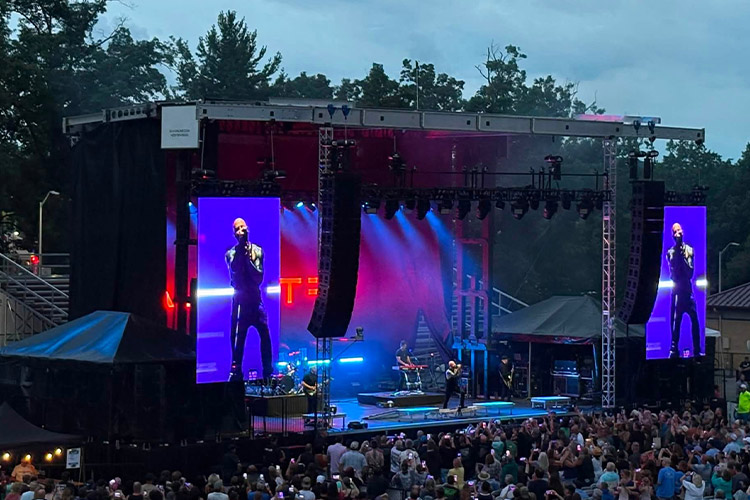
Its capabilities have already been proven on major international stages. At Rock in Rio Lisbon 2026, approximately 427 sqm of YES TECH LED displays helped create an open and visually layered stage where digital content blended naturally with lighting and stage architecture. Instead of overwhelming the performance, the display enhanced it—exactly the direction modern festival design continues to pursue.
Customer feedback reinforces this approach. As the production team at Fun Fest 2026 shared, "Everyone has been super happy with the product so far. Super easy to assemble and not much time." For touring professionals, comments like these often matter more than specifications. Faster setup means lower labour costs. Simpler workflows mean fewer production risks. Reliable performance allows creative teams to focus on the show rather than the equipment.
The story of touring LED displays has always been one of continuous evolution. Every generation has responded to changing production requirements, helping designers create more immersive stages while enabling rental companies to work more efficiently. From dependable rental platforms to creative stage systems, from solid LED walls to transparent touring solutions, each step has reflected how live entertainment continues to evolve.
MAir is not simply the latest product in the YES TECH portfolio. It represents the next stage in that journey—a transparent LED display built for the realities of modern touring, where creativity, efficiency, and reliability are expected to work together. As festivals continue to grow and stage design becomes even more ambitious, the future will belong to LED platforms that do more than display content. They will shape experiences, expand creative possibilities, and help bring the next generation of live productions to life.


+86-(0)731-84539619


Hunan Yestech Optoelectronic Co., Ltd. Terms of Service Privacy Policy Powered by szweb


