



ADDRESS
Blog/2026.08.12
Riverside events have a design advantage that conventional indoor venues simply cannot reproduce. The river, skyline, bridges, architecture, reflections, lighting, and open night sky are already part of the audience's visual field. For event designers, the challenge is therefore not simply how to add a larger or brighter LED display. It is how to introduce digital content without blocking the physical environment that gives the event its identity. This is where a transparent LED display offers a fundamentally different approach to outdoor stage design.
A conventional LED wall creates a solid visual surface. That is highly effective when a production needs a dense, immersive backdrop, but it also creates a clear boundary between the digital stage and the surrounding environment. A transparent LED screen takes a different approach by allowing part of the physical environment to remain visible through the display. Instead of replacing the background, the screen can become another visual layer within it. Digital graphics, performers, lighting, architecture, water reflections, and the skyline can occupy the same composition, creating a greater sense of depth and spatial integration.
For riverside festivals, concerts, fireworks shows, opening ceremonies, and other large outdoor productions, this distinction is especially important. A transparent rental LED display can change the role of the screen from a conventional backdrop into an architectural and visual element. The question is no longer simply how large the LED wall should be, but what should remain visible behind it, how the audience should perceive those layers, and how the display should physically adapt to the venue.
When the Landscape Becomes Part of the Stage
Riverside venues require a different design mindset from theaters, exhibition halls, or enclosed concert spaces. In a controlled indoor environment, designers can determine the background, viewing direction, lighting conditions, and most of the visual elements surrounding the audience. A waterfront venue is inherently more open. The stage may sit against a river, a bridge, a city skyline, or a large architectural structure, while audiences may experience the show from multiple positions around the site.
A transparent LED display allows designers to preserve that relationship. Video content can appear across the LED surface while portions of the river, architecture, performers, scenic structures, or lighting remain visible behind it. This creates a layered visual composition that is difficult to achieve with a conventional opaque LED wall. Instead of placing digital content in front of the environment, designers can place digital content within the environment.
This distinction has practical consequences for stage design. A traditional LED wall tends to establish a single dominant visual plane: the audience sees the content displayed on the screen, while much of what exists behind it becomes visually secondary or disappears altogether. A transparent LED screen introduces another layer into that composition. The digital content can sit between the audience and the physical environment, allowing the display, performers, scenic elements, and surroundings to remain part of the same visual field.
For a riverside event, that can produce a much stronger sense of depth. The river can remain visible beyond animated graphics. Architectural lighting can continue to contribute to the scene. Performers can appear to exist within the digital environment rather than simply standing in front of a digital wall. The result is not just a screen with transparency, but a different way of structuring visual space.
This is particularly valuable at night, when waterfront environments naturally contain multiple sources of movement and light. Reflections on the water, illuminated buildings, bridges, fireworks, stage lighting, moving performers, and LED content can all compete for attention. A solid screen can eliminate some of that depth by creating a dominant visual barrier. A transparent LED display can preserve more of the environmental information, giving designers greater control over how the digital content interacts with the venue.
The creative objective is therefore not necessarily to make the screen overpower the environment. It is to make the screen work with it. A graphic may appear to float over the water. Lighting fixtures behind the display can remain visible. The skyline can continue to provide depth as video content changes in the foreground. For events built around a specific location, this is a major advantage because the audience experience remains connected to the venue itself rather than looking interchangeable with a production staged in a completely different city.
Transparency Is Also an Engineering Question
The creative benefits of transparent LED technology come with an important engineering requirement: visual openness cannot come at the expense of structural performance.
A solid, heavy cabinet can provide structural strength, but an excessively dense structure may work against the visual openness that designers want to achieve. On the other hand, a structure that focuses too heavily on openness may not deliver the mechanical performance required for professional event production. A high-performance transparent rental LED display therefore needs to balance the two.
MT II addresses this relationship through its open dual-frame architecture. The design is intended to preserve the visual character of a transparent LED display while providing the structural capability required for large-scale installations. According to the supplied product information, MT II supports hanging installations of up to 20 meters. This expands its potential for elevated stage applications where the LED display is not simply a conventional front-facing screen but part of the larger structural composition of the event.
For riverside productions, that flexibility can be especially relevant because waterfront stages are rarely designed around a single standard rectangular screen. The display may need to sit above performers, integrate with a scenic frame, follow an unconventional stage structure, or remain visually connected to the surrounding landscape. In such applications, transparent LED technology becomes a structural design consideration as much as a visual one.
The open architecture of MT II is important for another reason: it supports the visual lightness of the display. A riverside stage is often defined by openness and depth. A visually heavy solid surface can quickly dominate that environment, whereas a more open display can occupy the same space while maintaining greater visual continuity with the background.
This is why the performance of a transparent LED display should not be evaluated only through image quality or transparency. For professional event applications, designers and production teams also need to consider how the cabinet behaves as part of a larger stage structure, how it can be suspended, how it can be configured, and whether the physical construction supports the visual concept. Transparency is ultimately valuable only when the engineering behind it can support the demands of real-world production.
One Display, Multiple Visual Modes
Another important development is the ability to change the visual behavior of the screen rather than treating transparency as a fixed characteristic throughout the entire production.
In transparent mode, the display can emphasize the river, skyline, architecture, lighting, or other scenic elements behind the screen. This can be particularly effective during opening sequences, atmospheric moments, scenic transitions, or parts of a show where the sense of place is an important part of the storytelling. In solid mode, the screen can provide a more concentrated visual surface when the production requires stronger graphic intensity, immersive content, or a more traditional LED-wall effect.
The significance of this function goes beyond convenience. It means that the LED display does not have to maintain exactly the same visual role throughout the show. A single stage can move between different visual languages without replacing the screen or redesigning the physical structure.
For example, a riverside performance could begin with a visually open composition in which the water and skyline remain prominent. As the show builds, the display could transition toward a denser digital treatment for high-impact content. Fireworks sequences, live performances, sponsor content, opening ceremonies, and closing segments may all require different relationships between the screen and the venue. A transparent LED screen with flexible operating modes allows the production design to respond to those changes.
This is an important distinction between transparent LED technology as a novelty and transparent LED technology as a professional design platform. The value is not simply that audiences can see through the screen. The value is that designers gain another degree of control over the relationship between digital content and physical space.
Designing for Real Riverside Geometry and Multiple Viewing Angles
MT II supports 90-degree splicing and curved configurations of up to ±15 degrees. These capabilities allow designers to move beyond the assumption that an LED display must remain a flat rectangle. The screen can follow the geometry of a stage structure, wrap around part of a scenic environment, or create a more dynamic relationship with the surrounding space.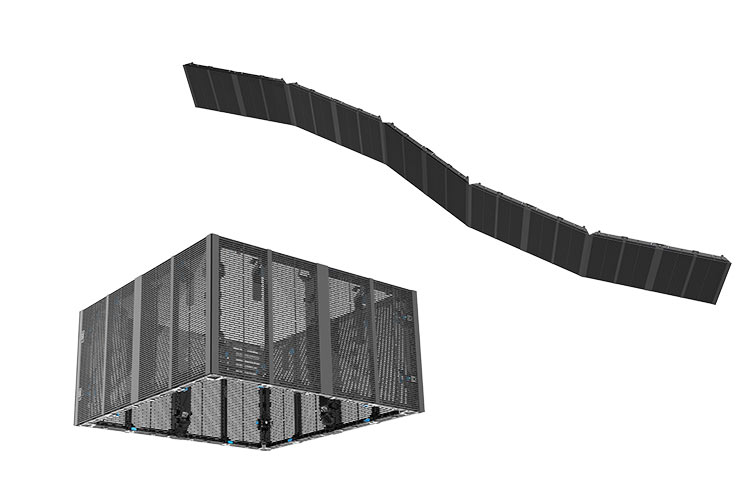
For riverside stage design, this matters because the visual composition is often broader than a conventional stage backdrop. The designer may need the LED display to respond to the architecture of the venue rather than forcing the architecture to accommodate a fixed screen geometry. Angled and curved configurations can help the display behave more like an architectural surface than an independent electronic product.
This also changes how designers think about the relationship between the audience and the screen. Instead of optimizing only one front-facing perspective, a more flexible LED configuration can support a broader spatial experience. The display can become part of the architecture of the stage and interact with multiple sightlines, which is particularly useful in large outdoor productions where audience distribution is less predictable than in a conventional indoor venue.
MT II and the Da Nang International Fireworks Festival
The Da Nang International Fireworks Festival provides a strong example of why transparent LED technology is relevant to riverside event design. Held along the Han River in Da Nang, DIFF combines fireworks, stage performances, lighting, music, and large-scale visual production in an open waterfront environment. In this context, the river is not simply the geographic location of the event. It is part of the visual experience itself.
That makes the relationship between the LED display and the environment particularly important. A conventional opaque LED wall could deliver powerful digital content, but it would also risk turning the riverfront setting into a secondary visual element. A transparent LED solution offers another possibility: the river, stage lighting, performers, fireworks, skyline, and digital content can occupy different layers within the same composition.
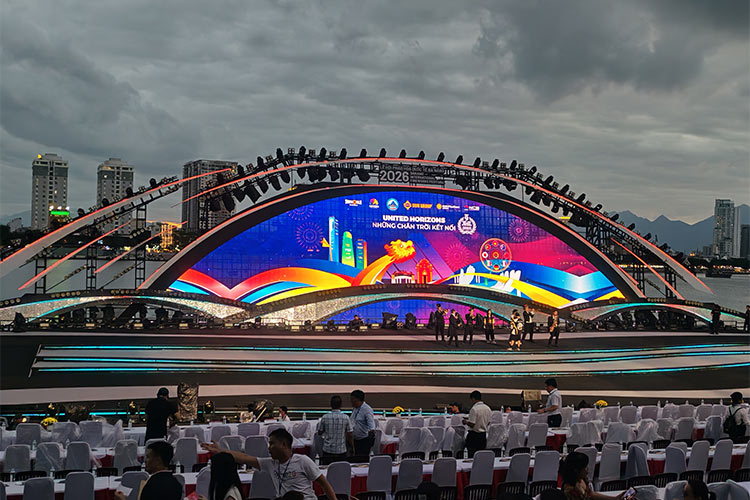
MT II's architecture supports this approach through the combination of an open dual-frame structure, transparent and solid operating modes, 90-degree splicing, and ±15-degree curved configurations. The display can retain a visually open character while providing the structural and configuration flexibility required for professional stage applications.
The broader design lesson is that the best outdoor LED display is not always the one that creates the strongest visual separation from its surroundings. In a location such as the Han River, the environment already has visual value. The role of the display is to add digital depth without unnecessarily removing the physical depth that already exists.
That principle is becoming increasingly important in modern outdoor stage design. As LED displays move beyond the traditional role of a rectangular video wall, designers are paying more attention to how digital surfaces interact with architecture, performers, lighting, and natural surroundings. The result is a shift from screen-centered design toward space-centered design.
The Future of Transparent LED in Outdoor Stage Design
Transparent LED displays are increasingly relevant because they address a broader design problem: how to integrate large-format digital content into environments that already have strong visual identities.
Transparent LED technology provides a practical framework for answering those questions.
MT II takes this concept further by combining transparency with the structural and configuration flexibility expected in professional rental LED applications. Its open dual-frame architecture, support for hanging installations of up to 20 meters, one-button Transparent/Solid switching, 90-degree splicing, and ±15-degree curved configurations give designers greater control over both the physical form and visual behavior of the display.
Ultimately, the strongest application of a transparent LED display in a riverside environment is not about making the screen disappear. It is about making the screen belong to the space.


+86-(0)731-84539619


Hunan Yestech Optoelectronic Co., Ltd. Terms of Service Privacy Policy Powered by szweb


