



ADDRESS
Blog/2026.10.14
Outdoor LED displays are often expected to operate in conditions that place greater demands on equipment than a typical indoor installation. At waterfront festivals, the display may face rain, humidity, airborne contaminants, and prolonged exposure to sunlight. When the equipment is installed for an extended event, reliability becomes a matter of maintaining consistent performance over time rather than simply passing an initial system check.
For rental companies, this distinction is particularly important. A display may remain installed for several weeks, during which the equipment is exposed to changing environmental conditions while continuing to serve a demanding live-event schedule. The cabinets, connections, supporting structure, and protective features must all be appropriate for the application.
The YES TECH MT II Series is designed for outdoor transparent LED rental and staging. Its magnesium-alloy hollow dual-frame structure, IP65 protection, salt-spray resistance, and open display architecture address several considerations relevant to demanding outdoor applications.
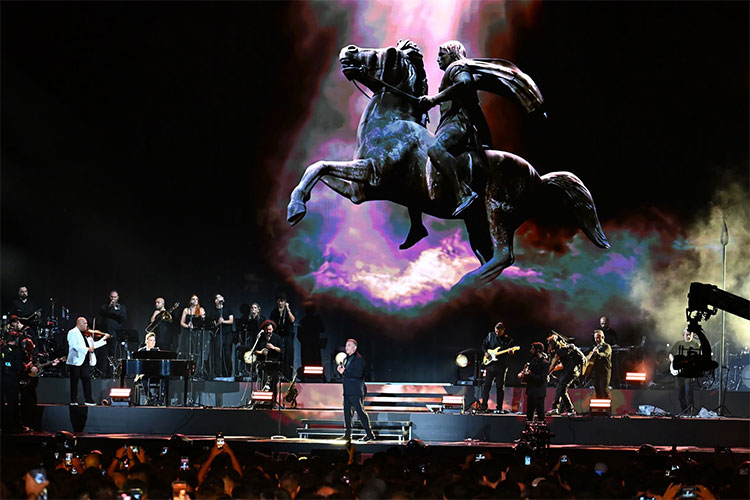
The Da Nang International Fireworks Festival (DIFF) provides a practical context for understanding these requirements. YES TECH's published project information describes an MT-series transparent LED deployment at the riverside festival that remained in place for six weeks, exposed to rain, salt spray, and sunlight. The display maintained stable visual performance on the event day.
This type of application highlights an important principle for outdoor LED screen selection: environmental protection, structural design, and operational reliability must be considered together. It also explains why the suitability of an outdoor display should be evaluated according to the actual venue and operating conditions, rather than a single specification.
Why Waterfront Events Create Different Requirements
Waterfront events can offer a distinctive setting for concerts, fireworks festivals, and large public celebrations. A stage beside a river or sea can incorporate the surrounding landscape into the visual experience, while large LED displays provide the content and imagery needed for the production.
However, being near water does not automatically mean that every installation faces the same environmental conditions. A riverside venue, a coastal location, and a stage directly exposed to sea spray can present different risks. The level of moisture, salt exposure, wind, and sunlight depends on the site and the duration of the deployment.
For an outdoor LED display, these conditions affect several aspects of equipment selection. The enclosure needs an appropriate level of protection against dust and water. The cabinet structure must be suitable for the installation configuration. Where corrosive exposure is relevant, material selection and salt-spray resistance also deserve attention.
The length of the deployment matters as well. A display installed for one evening may face different cumulative exposure from equipment that remains on site for several weeks. Longer installations create more opportunities for changing weather conditions and make inspection and maintenance planning particularly important.
Rental displays must also be suitable for the practical demands of the event. They are assembled into temporary structures, connected to power and signal systems, and eventually dismantled for future use. The product therefore needs to address environmental protection and structural performance without ignoring the requirements of transportation and installation.
These considerations make waterfront events a useful context for evaluating outdoor rental LED displays. The aim is not to assume that every riverside installation is exposed to severe salt spray, but to identify the actual environmental conditions and select equipment accordingly.
Six Weeks at the Da Nang International Fireworks Festival
The Da Nang International Fireworks Festival takes place in a riverside setting along the Han River in Vietnam. The event combines fireworks, live entertainment, and large-scale visual production, making the display system an important part of the overall audience experience.
According to YES TECH's published project information, the transparent LED display deployment at DIFF remained in place for six weeks. During that period, the equipment was exposed to rain, salt spray, and sunlight. The displays maintained stable visual performance on the event day.
The duration and environment are important aspects of the project. Rather than being used only for a short indoor presentation, the display formed part of an outdoor production in which environmental conditions had to be considered throughout the installation period.
The project also illustrates why outdoor reliability cannot be judged solely by whether a cabinet is described as waterproof. Moisture protection, exposure to potentially corrosive conditions, structural design, and the requirements of the complete installation all contribute to suitability for an outdoor event.
The DIFF deployment should be interpreted within the limits of the published information. The project report supports the six-week deployment and the stated environmental exposure, as well as stable visual performance on the event day. It does not establish a specific wind-speed rating, a measured salt-spray test duration, or a quantified failure rate for the equipment.
For rental companies, the practical value of the case lies in its relevance to real event conditions. It demonstrates why a display intended for outdoor use should be selected with attention to the environment, the length of deployment, and the requirements of the production.
IP65 Protection and the Importance of Defined Test Conditions
IP65 is an important specification for an outdoor LED display because it describes protection against solid foreign objects and water under standardized test conditions.
The first digit, 6, indicates a dust-tight enclosure. The second digit, 5, indicates protection against water jets. This rating provides a defined basis for evaluating the enclosure's resistance to these forms of exposure.
For an outdoor festival, that protection is relevant because rain and dust may affect equipment during installation, testing, and operation. An appropriately rated display enclosure can help protect the components within its defined scope against the specified forms of ingress.
However, IP65 is not an unlimited waterproofing claim. It does not mean that the equipment can be submerged, exposed to every possible water condition, or installed without regard to cable routing and drainage. The rating should always be interpreted according to the relevant test conditions.
A complete outdoor installation contains more than LED cabinets. Power distribution equipment, external connections, signal cables, and supporting components must also be appropriate for the environment. Their protection requirements may differ from those of the display enclosure itself.
This is why environmental protection needs to be assessed at the system level. The cabinet's IP rating is an important part of the selection process, but the installation plan must also address the connections and equipment around it.
MT II carries an IP65 rating for outdoor applications. For rental companies considering a transparent LED display for a festival or waterfront event, this provides a relevant specification to assess alongside structural design, material characteristics, and the conditions of the venue.
Salt-Spray Resistance for Environments Where Corrosion Matters
Moisture is not the only environmental factor that may influence equipment reliability near the sea. Salt-bearing moisture can contribute to corrosion on exposed metal parts and electrical connections, depending on the level of exposure and the materials involved.
The risk is not identical at every waterfront venue. A riverside location may have very different atmospheric conditions from a stage positioned directly beside the sea. Distance from the water, wind direction, exposure duration, and local environmental conditions all affect the level of concern.
Where salt exposure is relevant, a display's corrosion-related protection becomes an additional consideration. This is distinct from its IP rating. IP65 describes protection against dust and water ingress under standardized conditions; it does not independently establish salt-spray resistance.
YES TECH specifies salt-spray resistance for MT II. This characteristic is relevant when assessing the product for outdoor applications where corrosion exposure may be a concern.
It should not be interpreted as a guarantee against all corrosion in every coastal environment. Equipment suitability still depends on the actual conditions, the installation, and the maintenance procedures followed throughout the deployment.
For a rental company, the correct approach is to identify the environment before selecting the display. If a project involves direct sea spray or prolonged coastal exposure, the buyer should confirm that the equipment and installation arrangements are appropriate for those conditions.
Inspection remains important after deployment as well. Following the manufacturer's maintenance guidance helps teams identify damage or deterioration that needs attention before the equipment is used again.
Magnesium-Alloy Construction for Professional Rental Applications
Environmental protection is only one part of outdoor reliability. The cabinet structure also matters because rental equipment is repeatedly transported, handled, assembled, and dismantled.
MT II uses a magnesium-alloy hollow dual-frame structure with integrated reinforcing ribs. The design is intended to combine transparency with structural reinforcement, addressing the requirements of professional staging applications.
Magnesium alloy is relevant to rental equipment because material selection affects weight and handling as well as structural performance. However, weight alone does not determine strength. The geometry of the frame, reinforcing elements, connections, and load distribution also contribute to how the assembled system performs.
MT II's hollow dual-frame architecture is designed to maintain the open appearance of a transparent LED display while providing structural rigidity and load-bearing characteristics for rental and staging use.
This balance matters when a display is assembled into a large stage configuration. The cabinets must connect into the intended screen geometry, and the complete system must be suitable for the loads and environmental conditions associated with its installation.
For rental companies, cabinet design also affects the practical work involved in moving equipment between venues. Cabinets need to be handled safely and connected correctly, with inspection procedures maintained throughout the equipment's service life.
The MT II structure therefore addresses more than one requirement. It supports the transparent visual format while providing a framework designed for the structural and operational demands of professional rental applications.
Transparency and Wind Management in Outdoor Stage Design
Transparent LED displays are often used when a production needs to combine digital content with the physical stage environment. The open structure can allow lighting, scenic elements, and other objects behind the display to remain visible.
MT II provides at least 50% transparency. Its open architecture allows air to pass through the display, which can help reduce the wind-blocking effect compared with a conventional solid LED wall of the same overall dimensions.
This characteristic can be relevant to large outdoor installations. Wind acts on the screen and transfers forces through the cabinet connections and supporting structure. Allowing air to pass through the display can influence that interaction, but it does not eliminate wind load.
The actual forces acting on a screen depend on several factors, including its dimensions, configuration, installation height, local wind conditions, and supporting structure. The transparency percentage alone is not sufficient to determine whether a particular installation is suitable for a given site.
For this reason, wind-load assessment must be based on the complete installation. Cabinet design, supporting trusses, rigging equipment, connection methods, and the intended operating conditions all need to be considered together.
MT II's magnesium-alloy dual-frame structure and integrated reinforcing ribs are intended to combine transparency with structural reinforcement. This design approach is relevant to outdoor staging, where an open visual profile must be balanced with the structural requirements of the display.
For rental companies, the important point is that transparency and structural performance should not be treated as competing specifications. Both need to be evaluated according to the intended application, and neither replaces appropriate engineering.
Structural Requirements for Suspended and Complex Installations
Outdoor festival stages often use more than one flat display wall. The LED system may include suspended screens, curved sections, corner configurations, or displays positioned around different parts of the stage.
These configurations can create different structural requirements. A suspended screen needs an appropriate rigging and supporting arrangement, while curved or staggered sections must be assembled according to the product's specified connection methods.
MT II supports hanging installations up to 20 meters under the specified configuration. This gives production teams options for elevated stage designs, but the figure must be considered together with the engineering requirements of the complete installation.
The allowable configuration depends on factors such as the total screen dimensions, load distribution, supporting structure, connection hardware, and environmental conditions. Qualified professionals must assess the planned installation rather than relying on the hanging-height specification alone.
MT II also supports curved splicing with ±15° adjustment, 90-degree corner applications, and staggered cabinet splicing. These capabilities allow the screen to be adapted to different stage layouts.
An optional shutter system enables the display to switch between transparent and solid modes. This gives production teams more flexibility when balancing the visual openness of the stage with the need for a more continuous display surface.
For outdoor events, these options should be considered alongside the supporting structure and installation plan. Creative flexibility is useful only when the complete configuration is appropriate for the venue and intended operating conditions.
Installation Efficiency During a Multi-Week Event
A multi-week festival creates practical demands that go beyond the performance period. The display must be installed accurately, connected, tested, and prepared for the production schedule. After the event, the equipment must be dismantled and returned to the rental workflow.
MT II incorporates a quick-lock system and large handles designed to simplify cabinet handling and connections. These features are intended to improve installation and dismantling efficiency, including workflows designed for one-person cabinet operation.
The series is available in 1000 × 500 × 83 mm and 500 × 500 × 83 mm cabinet sizes. The two formats give production teams options when planning display dimensions and adapting the screen to the stage design.
Installation efficiency is relevant because a large display requires coordinated work across cabinet assembly, structural connections, cabling, power distribution, signal verification, and final inspection. A practical handling system can make these tasks more manageable, although the actual installation time depends on the project scale, crew size, site access, and structural arrangements.
Efficiency should not be confused with reduced inspection. A display must still be assembled according to the manufacturer's instructions, and the supporting structure and connections need to be checked before the system is operated.
For rental companies, the combination of practical handling features and clear inspection procedures can help create a more manageable deployment process. The value becomes particularly apparent when equipment is used repeatedly across different event environments.
Maintenance Is Part of Long-Term Outdoor Reliability
Outdoor LED equipment should be inspected before, during, and after deployment according to the manufacturer's guidance and the requirements of the project.
Before installation, teams should check the cabinets, connections, cables, power components, and relevant accessories. The supporting structure and rigging equipment should also be inspected according to the installation plan.
During a multi-week event, the maintenance approach should reflect the environmental conditions and the equipment manufacturer's recommendations. If unusual weather or a mechanical incident occurs, the affected components should be assessed before the display continues operating.
After the deployment, the equipment should be inspected for damage or deterioration. Cleaning, drying, repairs, and storage should follow the manufacturer's instructions, particularly where the display has been exposed to rain, salt-bearing moisture, or other demanding conditions.
These practices matter because neither IP65 protection nor salt-spray resistance removes the need for maintenance. Product specifications define capabilities under specified conditions; inspection helps determine whether the actual equipment remains suitable for continued use.
For rental companies, maintenance is part of managing equipment across its service life. A display may be used in different environments over multiple deployments, so condition checks and appropriate repairs help maintain its readiness for future projects.
Evaluating MT II for Outdoor LED Rental Projects
When selecting an outdoor LED display, buyers should begin with the requirements of the planned event rather than choosing a product based on one specification.
For a waterfront festival, consider the actual exposure to rain, humidity, water spray, dust, and salt-bearing moisture. For a large suspended display, examine the dimensions, installation height, supporting structure, and applicable load calculations. For a rental application, consider transportation, handling, connection methods, and maintenance requirements.
MT II addresses several of these considerations through its magnesium-alloy hollow dual-frame structure, integrated reinforcing ribs, at least 50% transparency, IP65 protection, salt-spray resistance, and quick-lock system.
Its configuration options provide flexibility for flat, curved, corner, and staggered display arrangements. The optional shutter system also allows the display to switch between transparent and solid modes.
These characteristics make MT II relevant to professional outdoor rental and staging applications, but the suitability of any specific deployment must be confirmed against the actual environmental and structural requirements.
The DIFF project provides a useful example of why this evaluation matters. A six-week outdoor deployment exposed the display to rain, salt spray, and sunlight, demonstrating the importance of considering environmental conditions over the full installation period rather than only on the event day.
The reported result supports the value of assessing outdoor equipment in the context of real applications. It should not be extended into unsupported claims about exact wind speeds, unlimited waterproofing, or performance under every possible environmental condition.
MT II: An Outdoor LED Display Designed for Demanding Applications
Outdoor LED screen reliability depends on a combination of environmental protection, cabinet design, structural engineering, installation practices, and maintenance.
The Da Nang International Fireworks Festival illustrates the practical relevance of these factors. According to YES TECH's published project information, the transparent LED display deployment remained in place for six weeks, experienced rain, salt spray, and sunlight, and maintained stable visual performance on the event day.
For MT II, the relevant design considerations include its IP65 rating, salt-spray resistance, magnesium-alloy hollow dual-frame structure, at least 50% transparency, and connection system designed for professional rental workflows.
Together, these characteristics address several requirements associated with outdoor transparent LED staging. Their value depends on selecting the correct configuration, engineering the supporting structure, and following appropriate operating and maintenance procedures.
For rental companies, event production teams, and staging professionals, the most useful way to assess an outdoor LED display is to match its capabilities to the actual venue and project requirements. MT II offers a platform designed to balance transparency, structural reinforcement, environmental protection, and rental practicality for demanding outdoor applications.


+86-(0)731-84539619


Hunan Yestech Optoelectronic Co., Ltd. Terms of Service Privacy Policy Powered by szweb


