



ADDRESS
Blog/2026.10.15
For professional LED rental companies, purchasing equipment is only the beginning of managing a display system. Cabinets must be stored, transported, installed, dismantled, inspected, and prepared for subsequent projects. Over time, the way equipment is handled and maintained becomes an important part of rental operations. For LED displays built around carbon fiber structures, understanding the cabinet's construction is essential to establishing appropriate inspection procedures and making informed maintenance decisions.
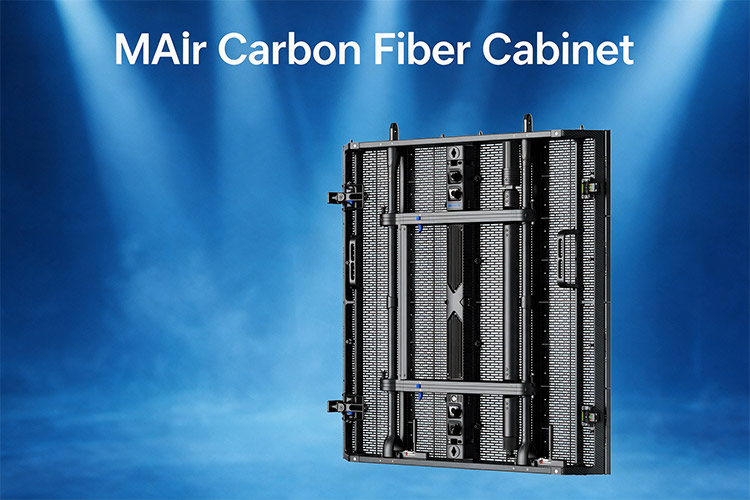
YES TECH MAir uses a seamless, one-piece molded carbon fiber frame as the main structure of its LED cabinet, combined with metal support components. This design provides a distinct structural approach for outdoor transparent LED rental applications. However, the long-term management of any professional LED cabinet should be based on the complete product design, the manufacturer's technical guidance, and the conditions under which the equipment is used. Carbon fiber should not be treated as a maintenance-free material, and its presence alone does not determine the inspection requirements or service life of a finished product.
For rental businesses, the more useful question is how to manage a carbon fiber cabinet throughout its working life. By establishing consistent inspection practices, keeping accurate equipment records, and distinguishing cosmetic issues from conditions that require technical assessment, companies can make better-informed decisions about equipment readiness and maintenance.
Why Cabinet Inspection Should Follow the Actual Structure
An LED cabinet is a complete assembly, not simply a frame made from one material. Its condition must be assessed with reference to the frame, support components, connections, display modules, electrical interfaces, and other parts included in the product. Each component can have different inspection requirements, and a visible issue in one area does not necessarily indicate the condition of the entire cabinet.
For YES TECH MAir, the main cabinet frame uses one-piece molded carbon fiber construction, while metal support components form part of the overall structure. Inspection procedures should therefore reflect the actual construction described in the manufacturer's documentation. A general checklist designed for an all-metal cabinet may not cover every consideration relevant to a carbon fiber composite structure, just as a carbon fiber inspection alone would not cover the complete LED cabinet.
The first step is to establish a clear reference for the equipment's normal condition. Rental companies should retain the product documentation, applicable inspection instructions, and any manufacturer-provided criteria for identifying damage. Where practical, records of the cabinet's initial condition can help technicians compare later observations with the original reference. The purpose is not to assume that every visible difference represents a defect, but to make changes easier to identify and evaluate.
Inspection should also distinguish between observable symptoms and confirmed causes. A scratch on a surface, for example, does not by itself establish that a structural component has been compromised. Conversely, a cabinet that appears acceptable from a distance cannot automatically be considered structurally sound. Technicians should follow the manufacturer's criteria and refer uncertain or potentially structural damage for qualified assessment rather than making conclusions based only on appearance.
This distinction is especially important for rental equipment because cabinets may pass through multiple teams and venues. A consistent inspection method helps prevent decisions from depending entirely on individual experience or informal handover notes. It also provides a more reliable basis for deciding whether equipment is ready for its next deployment.
What to Check Before and After a Rental Deployment
A practical inspection process should be integrated into the rental workflow rather than reserved for situations in which a problem becomes obvious. Before deployment, technicians need to confirm that the equipment meets the applicable requirements for the planned use. After dismantling, they need to identify any changes that may have occurred during the event, handling, or return process. The exact checks and acceptance criteria must come from the product documentation and the company's approved procedures.
For a carbon fiber cabinet, the frame should be assessed for visible changes that the manufacturer's inspection guidance identifies as relevant. These may include unusual surface damage, cracks, localized impact marks, or other signs requiring further evaluation. The presence of a mark should not automatically be interpreted as structural failure, but suspected damage to a structural component should not be dismissed as cosmetic without an appropriate assessment.
The metal support components and cabinet connections should also be checked according to the applicable technical instructions. Damage, deformation, missing parts, or abnormal movement may indicate a need for further inspection. The display modules, connectors, cables, and locking mechanisms should be assessed separately under their respective procedures. These checks address different parts of the cabinet and should not be replaced by a visual review of the frame alone.
Environmental conditions also matter when determining what to inspect. Outdoor productions may expose equipment to rain, dust, airborne contaminants, and other conditions that require attention during post-event checks. MAir's published specifications include IP65 protection on the front and rear, using YES TECH's Black Seal Potting Technology. This rating describes the product's specified ingress protection; it does not mean that technicians can ignore the manufacturer's cleaning, inspection, or handling instructions after outdoor use.
Cleaning should follow the manufacturer's approved method for the cabinet and its components. Unapproved solvents, abrasive tools, excessive pressure, or improvised repair materials may cause damage or interfere with protective features. When a cleaning method is uncertain, technicians should confirm its suitability with YES TECH rather than experiment on the equipment.
A consistent process before and after deployment helps rental companies identify issues while the equipment history is still clear. It also creates a useful handover between warehouse staff, technicians, and production teams. The objective is not to increase inspection complexity unnecessarily, but to make sure the right checks are performed at the right stage.
Understanding Carbon Fiber Damage Without Making Unsupported Assumptions
Carbon fiber composites differ from conventional metals in their material structure and damage characteristics. A visible surface mark may have different implications depending on its depth, location, and relationship to the underlying composite structure. For that reason, inspection decisions should not rely on assumptions that all marks are harmless or that every mark requires the same response.
The appearance of a carbon fiber surface alone may not be sufficient to determine whether damage is limited to the surface or extends into the composite. Depending on the product construction and the nature of the suspected damage, a qualified assessment may be required. The appropriate evaluation method should be established by the manufacturer or a competent specialist familiar with the material and the specific cabinet design.
Rental technicians should therefore avoid attempting structural repairs based solely on general knowledge of carbon fiber. Drilling, sanding, cutting, applying resin, or adding reinforcement without an approved procedure could alter the component or make subsequent assessment more difficult. A repair method that is appropriate for one composite product cannot automatically be assumed suitable for another.
The same principle applies to the interpretation of impact damage. An impact may leave a visible mark, but the appearance alone may not reveal its full significance. If a cabinet has experienced an unusual impact, been subjected to an abnormal load, or shows a condition that the manufacturer identifies as requiring technical review, the equipment should be assessed according to the relevant procedure before being returned to service.
This is not a claim that carbon fiber cabinets are inherently difficult to maintain. Rather, it reflects the importance of using product-specific criteria for a specialized structural material. A documented assessment process gives rental companies a more dependable way to distinguish routine observations from issues requiring expert attention.
For YES TECH MAir, the appropriate reference is the manufacturer's guidance for the actual cabinet and its construction. Any repair decision should be based on that guidance, the observed condition, and a qualified assessment where necessary—not on assumptions derived from carbon fiber products in other industries.
Building Equipment Records That Support Long-Term Management
Inspection has limited value if its findings are not recorded consistently. For rental companies managing a large inventory, an equipment record can connect the cabinet's observed condition with its deployment history, inspection results, and maintenance decisions. This information becomes particularly useful when equipment moves between projects or is handled by different teams.
A basic record can identify the cabinet, the date of inspection, the person responsible, the condition observed, and any action taken. Where an issue requires further assessment, the record should distinguish the original observation from the subsequent technical conclusion. For example, a technician may record a suspected frame issue, while the final assessment is completed later by an authorized specialist. Keeping these stages separate helps avoid treating an initial observation as a confirmed diagnosis.
Photographs can provide additional context when used consistently. They may help document the location and appearance of an observed condition, but they cannot replace physical inspection or a qualified structural assessment. Images should be treated as supporting evidence rather than as proof that a component is safe or damaged.
Maintenance records should also include the actions performed and any applicable instructions followed. If a component is replaced, adjusted, or repaired under an approved procedure, recording that action helps the next technician understand the cabinet's history. Where the manufacturer specifies inspection intervals, acceptance criteria, or service procedures, the records should follow those requirements.
For larger rental inventories, a consistent classification system can help teams prioritize follow-up. Routine observations, items awaiting technical review, and equipment cleared for use should be recorded distinctly according to the company's procedures. The classification should never override a manufacturer's restriction or an unresolved safety concern. Its purpose is to improve communication and prevent uncertain equipment status from being lost during handover.
This recordkeeping approach is not unique to carbon fiber. It is a general equipment-management practice that becomes more effective when aligned with the actual design and inspection requirements of the product. For MAir, the combination of product-specific inspection criteria and traceable records can help rental teams manage cabinet condition more consistently across repeated deployments.
Maintenance Planning Should Reflect the Complete Cabinet
A carbon fiber frame is only one part of an LED cabinet, so maintenance planning should not focus exclusively on the frame material. Display modules, connectors, electrical interfaces, locking mechanisms, metal support components, and protective features may each require different checks. A cabinet can have a frame that appears normal while another component needs attention, just as a problem with an accessory does not automatically indicate a defect in the carbon fiber structure.
For this reason, the maintenance plan should be organized around the manufacturer's complete product documentation. Each inspection item should have a defined method, a clear acceptance criterion where specified, and an appropriate escalation path for uncertain conditions. If the documentation does not provide enough information to assess a suspected issue, the correct next step is to obtain technical guidance rather than invent a repair method.
The distinction between routine maintenance and structural assessment is particularly important. Routine tasks may be carried out by trained rental technicians according to approved procedures. Suspected damage to a load-bearing or other structural component may require a different level of assessment. Companies should establish who is authorized to make each decision and under what conditions equipment must be withheld from deployment.
The same approach applies when planning maintenance after unusual events. If equipment has been exposed to conditions outside its intended operating parameters, sustained an impact, or experienced a handling incident, the company should follow the applicable instructions for determining whether additional inspection is necessary. A standard post-event check should not be assumed sufficient in every circumstance.
For outdoor rental systems, product protection ratings and environmental specifications are relevant to planning, but they do not remove the need for condition-based inspection. MAir's IP65 protection specification should be interpreted within the product's documented conditions of use. Cleaning, drying, storage, and inspection should follow the manufacturer's guidance, especially when equipment has been exposed to conditions that may affect components or connections.
A clear maintenance framework helps a company apply the same standards across its inventory while respecting differences between products. It also makes the process easier to explain to technicians, production managers, and equipment purchasers who need to understand how the system will be managed after delivery.
Conclusion: Make Inspection Part of the Equipment Lifecycle
The long-term management of a professional LED cabinet depends on more than its frame material. Construction, component condition, handling history, operating environment, maintenance procedures, and technical documentation all contribute to the decisions made throughout the equipment's working life.
YES TECH MAir uses a seamless, one-piece molded carbon fiber frame as the main structure of its cabinet, combined with metal support components. This design makes it important to evaluate the product according to its actual construction and the manufacturer's guidance rather than applying assumptions from other cabinet designs or composite products.
For rental companies, a reliable approach starts with documented inspection criteria, consistent checks before and after deployment, clear records, and a defined process for escalating suspected structural damage. Routine maintenance should follow approved instructions, while uncertain or potentially structural issues should receive appropriate technical assessment before the equipment returns to service.
Carbon fiber should neither be treated as a material that requires no attention nor as one that automatically demands complex maintenance. The appropriate approach is to understand the specific product, follow its documented procedures, and base decisions on observed conditions and qualified assessment. By making inspection and recordkeeping part of normal rental operations, companies can manage their equipment more systematically and make better-informed decisions about the continued use of their YES TECH MAir cabinets.


+86-(0)731-84539619


Hunan Yestech Optoelectronic Co., Ltd. Terms of Service Privacy Policy Powered by szweb


