



ADDRESS
Blog/2026.08.04
Transparent LED displays are becoming an increasingly important part of modern stage design. From large-scale concert tours and music festivals to outdoor live productions, transparent LED technology has created new possibilities for designers to build immersive visual experiences while maintaining a sense of depth and openness on stage.
Compared with traditional LED displays, transparent LED screens allow audiences to see through the display surface, preserving the visibility of performers, lighting effects, and stage structures behind the screen. This unique visual characteristic has made transparent LED an attractive solution for productions looking to achieve a lighter and more dynamic stage atmosphere.
However, as transparent LED displays continue to move from indoor applications into more demanding outdoor touring environments, an important question needs to be addressed: Does a transparent LED display automatically mean it is ready for outdoor wind conditions?
Many people naturally associate a transparent structure with wind permeability. Because the display appears open, it is easy to assume that air can freely pass through the screen and that wind impact will be significantly reduced. In reality, transparency and wind performance are two completely different technical concepts.
Transparency Is a Visual Feature, Not a Wind Performance Guarantee
The transparency of an LED display describes its visual openness — how much of the background environment can be seen through the screen. Wind performance, however, is determined by how the entire structure reacts when exposed to airflow.
A transparent LED display is still a complete engineered structure consisting of LED modules, frames, connection systems, power components, and mechanical parts. When wind passes through the display, these elements affect airflow patterns and create aerodynamic forces. The actual wind behavior of a transparent LED display depends on multiple factors, including overall cabinet design, structural layout, component arrangement, materials, and installation conditions. This means that a screen can appear highly transparent while still experiencing significant wind pressure. Transparency creates visual openness. Structural engineering determines outdoor reliability.
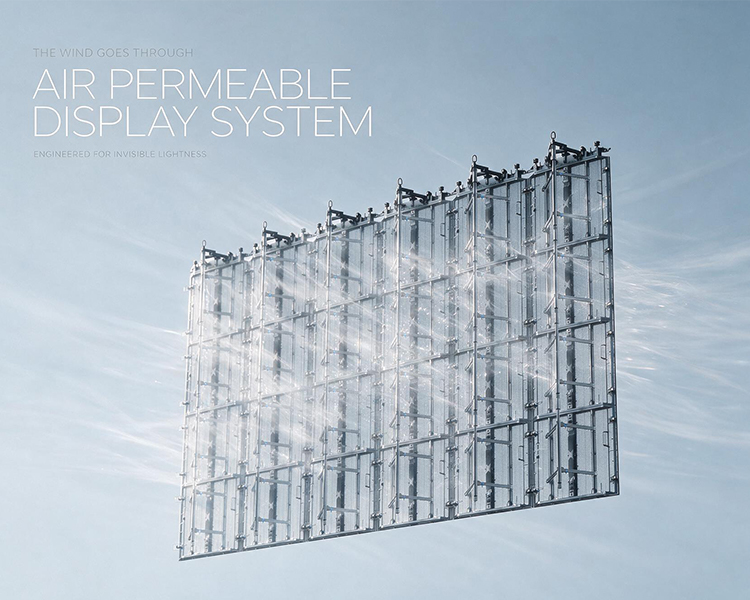
Wind Load: The Hidden Challenge Behind Outdoor LED Displays
For outdoor LED installations, wind is one of the most important environmental factors that must be considered. A large LED wall installed outdoors behaves as a structure exposed to continuous external forces. Wind creates pressure on the display surface, transferring loads through the cabinet structure, mounting system, and supporting framework.
The challenge becomes even greater in touring applications, where LED displays are frequently installed in different environments, including open fields, stadiums, coastal areas, and temporary outdoor venues. Unlike permanent installations, touring productions operate under strict schedules and changing conditions. A display system may need to be transported, installed, dismantled, and rebuilt repeatedly across multiple locations. In these situations, reliability cannot depend only on visual design. The display must provide stable structural performance throughout the entire production process. For staging companies and production teams, the real requirement is not simply a transparent LED screen. It is a complete solution that combines creative flexibility, installation efficiency, and proven outdoor performance.
What Defines a Professional Touring Transparent LED Display?
The future of transparent LED technology is not only about achieving higher transparency. The real challenge is creating a balance between visual impact, structural strength, and operational efficiency. For touring productions, weight plays a critical role. Every installation involves transportation, handling, assembly, and dismantling. A lighter display system can reduce labor requirements, improve setup efficiency, and provide greater flexibility when moving between venues. However, lightweight design cannot come at the expense of structural reliability.
A professional touring display must achieve both reduced weight and sufficient strength through advanced materials and engineering design. The structure must withstand repeated handling while maintaining stability during outdoor operation.
Beyond structural design, outdoor reliability requires measurable validation. Testing and engineering data provide production teams, rigging specialists, and structural engineers with the confidence needed when planning complex installations. A transparent LED display designed for touring must not only look impressive — it must perform reliably when real-world conditions become challenging.
YES TECH MAir: Engineered for Outdoor Touring Challenges
Developed for professional touring and outdoor applications, the YES TECH MAir Series was designed around the real demands of modern stage productions: lightweight transportation, efficient installation, and dependable performance. Rather than focusing only on transparency, MAir adopts a comprehensive engineering approach that balances visual design with structural capability.
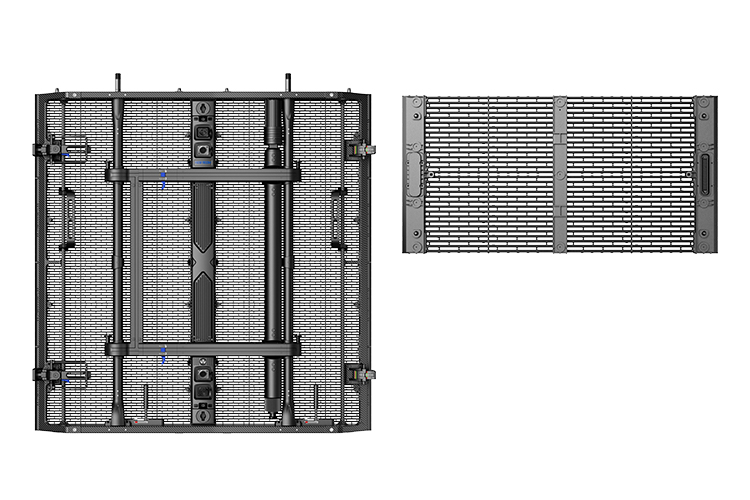
The series features an integrated carbon fiber frame design, reducing cabinet weight while enhancing overall structural strength. This lightweight construction makes MAir easier to transport, handle, and deploy during fast-paced touring schedules. For production teams managing multiple venues and tight turnaround times, reducing physical workload and improving installation efficiency can have a significant impact on overall project execution.
Proven Wind Resistance for Demanding Outdoor Applications
Outdoor reliability ultimately needs to be demonstrated through testing and engineering verification. The YES TECH MAir Series has undergone wind resistance testing and is designed to support demanding outdoor applications. The system can withstand wind speeds of up to 20 m/s, equivalent to Beaufort Force 8 wind conditions, while supporting hanging installations at heights of up to 25 meters.
These capabilities demonstrate that MAir is not only designed to deliver the visual advantages of transparent LED technology but also engineered to meet the structural requirements of large-scale outdoor productions.
For touring applications, stability is directly connected to the quality of the final performance. A professional LED display must maintain reliable operation throughout the event, ensuring consistent brightness, accurate colors, and smooth image output even in challenging outdoor environments. Whether used for concert tours, music festivals, or large-scale outdoor productions, MAir provides the confidence that production teams need when performance conditions become demanding.
Beyond Transparency: The Future of Touring LED Displays
Transparent LED technology is transforming the possibilities of modern stage design, but true innovation goes beyond creating a screen that simply looks transparent. For large-scale touring applications, transparency is only the beginning. A professional outdoor transparent LED display must combine creative visual expression with lightweight construction, efficient deployment, structural reliability, and proven environmental performance.
With its lightweight carbon fiber structure, tested wind resistance, and touring-focused design philosophy, YES TECH MAir demonstrates how transparent LED technology can deliver both creative possibilities and dependable performance for the world’s most demanding outdoor productions.


+86-(0)731-84539619


Hunan Yestech Optoelectronic Co., Ltd. Terms of Service Privacy Policy Powered by szweb


