



ADDRESS
Blog/2026.09.07
When event professionals sit down to evaluate an LED display, the spec sheet usually leads the conversation: pixel pitch, brightness, refresh rate, resolution, cabinet weight, price per square meter. All of that matters — but for rental work it only tells part of the story. A big LED screen doesn't just show up at a venue and switch on. First it gets stored, packed, loaded, driven across town or across the country, unloaded, wheeled through the venue, bolted into place, taken down, and loaded back onto a truck. A rental house running concerts, festivals, sports events, touring shows, and big outdoor productions may run that whole loop dozens of times before the gear retires.
And as video walls keep getting bigger, transport stops being a footnote. It starts pulling on labor, truck utilization, the install schedule, the warehouse routine — and, before long, on whether the job actually makes money. Once you're talking hundreds or thousands of square meters, a small edge in cabinet count, pack density, or handling time gets multiplied across the whole build and then replayed every single time the wall goes back out. So the real question isn't "what does this screen cost to buy." It's "how cheaply can we move it, set it, and send it to the next gig."
Transport Is Part of the Real Cost of an LED Rental Job
A permanently installed wall is a different animal. You bolt it into a stadium, a mall, an office lobby, a transit hub — wherever — and the logistics mostly vanish. The truck shows up once.
So transport has to sit inside the real operating cost of rental LED, not beside it. The honest way to picture a rental job isn't as one install — it's as a full cycle: prep, pack, load, haul, unload, move it through the venue, build, strike, haul back, inspect, repack. Each step sets up the next. Lots of small individual cabinets? That's more boxes for the crew to carry and more connections to make. Poor pack geometry? You'll need another vehicle. Slow handling? Your install window shrinks.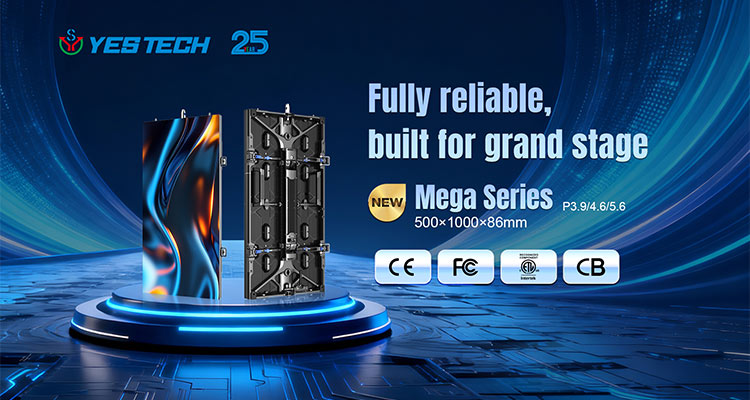
And the effect compounds the more you use the gear. Nobody buys a big rental wall for a single show. They buy an asset that's supposed to earn across dozens of deployments. That's why you have to price an LED wall over its working life, not at the invoice. The sticker matters, sure — but so do transport, labor, storage, service, build time, and how often it goes back out. All of it feeds the real return.
Why Cabinet Size Matters More Than It Looks
The cabinet is the Lego brick the whole wall is made of — modules, power supplies, receiving cards, frame, the lot, all inside one box. People usually talk about cabinet size in terms of how the screen gets configured, how flexible the build is, how the structure holds up. Fair enough. But cabinet size also quietly drives logistics, and the bigger the wall, the louder that gets.
Picture two walls, identical in total area. One built from small cabinets, one from a larger format. Same final picture on stage. Different story behind it. The small-cabinet version means more individual boxes to pack, truck, unload, position, wire together, strike, and repack. The large-cabinet version means fewer of everything. Smaller cabinets still earn their keep where you need to bend around weird shapes or squeeze into tight spaces — irregular builds, awkward sites. But for a big, fairly uniform wall, simply having fewer units to wrestle with makes the whole deployment calmer.
So cabinet size isn't just a dimension on a drawing. It's an engineering and ops call. The right format balances area, weight, handling, structure, truck volume, venue access, and how you actually build. Bigger isn't automatically better; smaller isn't automatically smarter. The only question that matters is whether the cabinet architecture fits the scale and the way the job runs.
That point lands hardest on big outdoor walls — concerts, festivals, sports, touring. Take a 1,000 m² build. The pixel pitch is almost beside the point; that's a mountain of gear either way. If you can cover the same area with fewer cabinets, the crew handles fewer units at build and strike — and the win doesn't stop at the stage. It reaches back into the warehouse, the truck, the loading dock, and the walk from the dock to the bowl.
Weight Isn't the Whole Transport Story
Weight is usually the first number buyers latch onto, and not without reason. Lighter cabinets are easier on the crew and easier on the truck's payload. But weight alone doesn't decide whether a wall moves well. A screen takes up space, and a truck runs out of cube just as fast as it runs out of kilos. Add in cabinet dimensions, pack density, cabinet count, flight cases, dollies, cable, spare modules, processors, power — the whole production kit — and you've got the real transport load.
There's a gap between "light" and "efficient to move." A cabinet can be featherweight and still eat a huge footprint. Another system packs the cube tightly but leans hard on payload. Proper rental logistics balance what you're moving against how you've organized it. On a big job the goal isn't to chase the lowest cabinet weight — it's to get the required area and all its support gear from A to B with the least fuss that's actually achievable.
And the job's not over when the truck hits the dock. Those cabinets still have to reach the stage — down a corridor, up in an elevator, around a ramp, through backstage, across a temporary path, or down a long outdoor run. A serious rental system has to think about both the highway and the last fifty meters. That's where an integrated dolly pays off: you move several cabinets as one unit instead of making the crew carry each one by hand.
On tour it matters even more. A touring show might strike the wall as soon as the lights come up and start packing the same gear for the next city. The equipment lives in a permanent loop of haul-and-deploy. Any time you shave off handling or packing gets replayed at every stop. Across a wall's working life, those repeated small wins add up to something you'd notice on the P&L.
From Transport Cost to Total Rental Economics
Transport really belongs inside the bigger "cost of owning this thing" picture. For a rental house the true operating cost is a chain: buy it, store it, haul it, prep it, build it, strike it, service it, haul it again. Those steps talk to each other. A cabinet that's easy to handle also tends to build faster. A transport system that loads clean helps the warehouse run cleaner. A wall you can deploy in a hurry lets the crew hit a tight show schedule.
That last part is no small thing, because shows run on the clock. Concerts, festivals, sports, corporate gigs — all of them hand you a fixed build window. The screen has to be up, tested, and ready for rehearsal inside it. If unloading or handling slips, install and troubleshooting time bleeds away. On a big outdoor wall, where the area is huge and you're also building the support structure, build efficiency stops being a tech preference and becomes a business number.
Now stack deployment frequency on top. Shaving a few minutes or a little handling effort sounds trivial for one event. But a fleet that goes out dozens of times replays that saving across hundreds of builds and strikes. That's exactly why seasoned buyers now score a wall on its whole rental workflow, not just the purchase price.
None of this lets you ignore the picture. Pixel pitch has to match the viewing distance. Brightness has to fight the ambient light. Refresh and processing matter for broadcast and camera capture. Contrast drives perceived quality; weatherproofing is non-negotiable outdoors; reliability and serviceability decide whether the gear survives a punishing tour schedule.
But once those boxes are ticked, operational efficiency joins the conversation. The best rental wall isn't the one that wins on every spec sheet. It's the one whose performance, physical architecture, handling, build workflow, and lifecycle math actually fit the jobs it'll do.
How MEGA Approaches Large-Format LED Rental
That operational lens is what shaped YES TECH MEGA — a large-format outdoor rental LED display built for large-scale event work. MEGA doesn't treat transport as something bolted on after the design is done. It folds the cabinet architecture together with features that serve how rental crews actually move gear.
Take the 500 × 1000 mm LED cabinet. That size exists for big walls, where cabinet count and handling speed stop being trivial. Against a build made entirely of small cabinets, the larger format covers the same area with fewer individual units — so at build and strike the crew positions, connects, pulls, and repacks a smaller pile of boxes. The cabinet choice reaches past the wall itself and into the whole process around it.
MEGA also builds in a 12-in-1 dolly system, so cabinets move as a group instead of one at a time. That ties transport straight to the rental routine — warehouse, truck load, venue move, stage build. At a big outdoor event where a lot of gear has to shift inside a tight window, moving several cabinets together is a real edge, not a nice-to-have.
On the picture side, it's an outdoor rental display offered in P3.9, P4.6, and P5.6 pixel pitches, so a rental house can match the wall to viewing distance and the show. MEGA also brings 5,000-nit brightness, an 8,000:1 contrast ratio, and a 7,680 Hz refresh rate for pro outdoor use. True Black LED technology and a matte-black cabinet design push the contrast and keep the on-camera look clean in stage light.
So the specs cover what the screen has to show; the cabinet format and the transport thinking cover the other half of the rental math — how the thing travels through repeat deployments. And that half matters, because a wall isn't only "on" when it's lit. To a rental house it's a physical asset that gets packed, trucked, unloaded, built, struck, stored, and sent out again.
MEGA, then, is a wider take on large-format rental. Its worth isn't pinned to one headline number. It's in how the cabinet architecture, transport, handling, build, and display performance pull together for big outdoor events.
The Economics of Moving an LED Screen
Walls keep growing and shows keep getting more complicated, and transport keeps getting harder to pull out of the rental economics. On a small screen, cabinet layout and handling barely move the needle. On a wall spanning hundreds or thousands of square meters, cabinet count, truck volume, handling, build time, and how often it redeploys turn into real operating factors.
That's the argument for scoring a wall on more than the headline specs. Pixel pitch decides if it fits the viewing distance. Brightness decides if you can see it in the light. Refresh keeps the image smooth and the cameras happy. Contrast carries the picture; IP rating and structure keep it alive outdoors. And the cabinet architecture decides how cheaply the whole system travels and builds.
The economics of a big LED wall get written every time it moves. A screen that packs, hauls, handles, builds, strikes, and redeploys easier banks efficiency across cycle after cycle. For a house running a large rental fleet, those repeat savings can weigh as much as the hardware spec you paid for.
The next chapter of large-format LED isn't only bigger, brighter, sharper. It's designing the system around how events actually run today. Put transport, handling, build, picture, and lifecycle together and the screen stops being a surface — it becomes a working asset in the rental business.
For the big concerts, festivals, sports, tours, and outdoor stages, that wider view is the one that pays. The question stops being "how good does it look lit up" and becomes "how well does it get there, do the job, and roll to the next one."


+86-(0)731-84539619


Hunan Yestech Optoelectronic Co., Ltd. Terms of Service Privacy Policy Powered by szweb


