



ADDRESS
Blog/2026.09.14
When people first encounter a transparent LED display, the concept seems straightforward: leave more open space between the LEDs, and more light can pass through. At a basic level, this is part of how transparency is achieved. But for a professional LED display designed for large-scale staging, touring, and outdoor events, that explanation is far from complete. A transparent LED display is not simply a conventional LED screen with fewer LEDs. Its optical layout, cabinet structure, installation method, and intended environment all have to work together. The challenge is not simply to create empty space between the display elements, but to create that open structure without compromising the display's usability as a professional LED system.
This distinction becomes particularly important when a transparent display is used across large stages, suspended installations, or complex event structures. In these applications, transparency is only one part of the equation. The display must also provide a consistent visual output, maintain structural integrity, and support practical installation and configuration requirements. That is why the development of a transparent LED display is fundamentally a design problem rather than a matter of simply reducing LED density.
Transparency Starts with the Optical Structure
The most visible difference between a transparent LED display and a conventional LED wall is the amount of open space within the display structure. Instead of forming a continuous visual surface, a transparent display allows the environment behind the screen to remain visible. This changes the role of the LED display itself. A conventional LED wall is generally designed to create a relatively continuous image surface. A transparent LED display has to perform two functions at the same time: reproduce visual content while preserving a degree of visual openness.
The balance matters because transparency and image reproduction are closely related to the physical arrangement of the display. Increasing the open area can improve visual permeability, but the display still needs sufficient LED elements and an appropriate pixel arrangement to reproduce content effectively. For this reason, transparency should not be viewed as an isolated specification. A percentage such as 50% transparency tells only part of the story. What matters in a real installation is how that transparency interacts with the content being displayed, the viewing environment, the stage structure behind the screen, and the physical configuration of the display.
In a live event, for example, a transparent LED screen may be positioned in front of performers, lighting fixtures, scenic elements, or another display surface. The purpose is not simply to make the LED panel disappear. The purpose is to add a layer of visual content without completely closing off the space behind it. That requires a different approach to LED display design.
The More Open the Structure, the More Important the Structure Becomes
There is an apparent contradiction at the heart of transparent LED design. The display needs to remain open enough to provide meaningful transparency. At the same time, the cabinet needs sufficient structural integrity for transportation, assembly, installation, and use. This is where transparent LED design moves beyond the simple idea of spacing LEDs farther apart. A cabinet is not just a surface for mounting LED modules. It is also the structural unit that has to be handled, connected, suspended, stacked, transported, and repeatedly installed in professional rental applications. When the display is configured into a large screen, the individual cabinets become part of a larger structure.
For rental and staging applications, this places particular importance on the relationship between the display's open areas and its supporting structure. The design has to provide the required level of transparency while retaining a practical cabinet architecture for real-world deployment. MT II takes this approach by using a magnesium-alloy dual-frame structure rather than simply relying on an open LED arrangement. According to YES TECH, the dual-frame design incorporates reinforcing ribs and is intended to increase load-bearing capacity while maintaining the open structure required for the transparent display. The system supports standard hanging installations up to 20 meters. The significance is not simply that MT II has a stronger frame. The more important point is that the structural system is designed as part of the transparent display itself. In other words, transparency is not achieved first and structure added later. The two are considered together.
Why Cabinet Architecture Matters in Large-Scale Applications
The difference becomes more apparent as the display gets larger. A small transparent LED installation may have relatively straightforward structural requirements. A large stage screen, however, can consist of hundreds or thousands of individual display elements arranged into a much larger surface. The installation may be suspended above a stage, positioned at the rear of a performance area, or integrated into a multi-sided stage structure.
At this scale, cabinet design directly affects how the display can be deployed. The physical cabinet dimensions, connection system, structural frame, and installation configuration all influence how efficiently the screen can be assembled and how easily it can adapt to different stage designs. This is particularly relevant to rental LED because the same display system may be installed in very different venues and configurations over its service life. A product designed only around a fixed installation scenario would have limited value for touring and event production.
MT II is designed around this rental-oriented requirement. Its current specifications include both 1000 × 500 mm and 500 × 500 mm cabinet formats, allowing the same product platform to accommodate different screen configurations. The system also supports both hanging and stacking installation using the same beam, according to YES TECH's product information. These features are not directly responsible for transparency, but they demonstrate an important principle: a professional transparent LED system has to be designed as a complete installation platform rather than as an optical surface alone.
Transparency Also Changes the Role of the Screen in Stage Design
A conventional LED wall often functions as the visual background of a stage. A transparent LED display can take on a different role because it does not completely separate the audience from the space behind it. This opens up more possibilities for layered stage design. A transparent screen can be positioned in front of performers or scenic elements while allowing the background to remain partially visible. It can also be used as part of a ceiling, overhead structure, side screen, or other stage configuration where a conventional solid LED wall could create a stronger visual barrier.
This does not mean that transparent LED is always a better replacement for conventional LED. The two serve different purposes. A solid LED display remains the more appropriate choice when the objective is to create a dense, continuous visual surface. Transparency becomes valuable when the design requires a balance between digital content and the physical space behind the display. That distinction is important because it changes how transparency should be evaluated. The question is not simply, "How transparent is the screen?" A more useful question is: What does the transparency allow the stage designer to do that a conventional LED wall cannot?
Transparency Has to Work in the Real Environment
For outdoor events, the relationship between openness and the surrounding environment becomes even more important. Large LED structures can occupy significant areas within a stage installation. A conventional solid screen presents a relatively continuous surface to the surrounding environment, while a transparent or blow-through display allows air to pass through the open structure.
This does not eliminate the need for proper structural engineering or installation planning. Wind conditions, support structures, rigging systems, local regulations, and the specific installation configuration still need to be considered for every project. However, the open structure of a transparent LED display can be an important consideration when designing large outdoor installations.
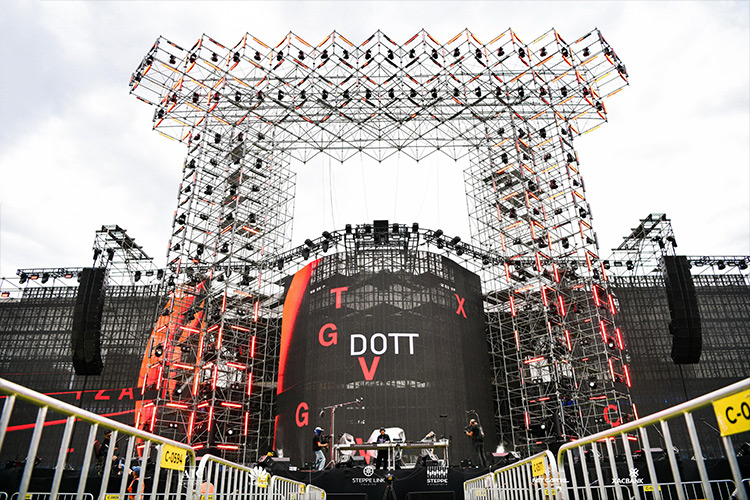
YES TECH has applied MT II in large-scale outdoor staging, including the 2,000 m² panoramic stage at Kharkhorum Festival 2026. The project used MT II across a large multi-screen configuration in an outdoor stadium environment. YES TECH's project documentation specifically highlights the display's approximately 50% transparency and its ability to allow air to pass through the display structure. This is a useful example of why transparency should be considered as part of the complete system rather than as a visual specification alone.
A Transparent Screen Still Has to Perform Like an LED Display
There is another important consideration. Transparency cannot come at the expense of the basic functions expected from a professional LED display. The screen still needs to reproduce content consistently and respond appropriately to the requirements of live production. Refresh rate, brightness, color consistency, pixel pitch, protection, and system compatibility remain relevant regardless of whether the display is transparent. MT II uses an H3.9–V7.8 pixel pitch platform and supports a 7680 Hz refresh rate. The current product specification also lists IP65 protection and brightness options of up to 4,500 nits on the main product page.
These specifications matter because transparency is not a substitute for display performance. A transparent LED screen is still an LED screen first. Its additional value comes from what its open structure makes possible in a stage or architectural environment. That is why good transparent LED design is fundamentally about balance.
The Challenge Is Not Maximum Transparency. It Is Useful Transparency.
It can be tempting to treat transparency as a race toward a higher percentage. But maximum transparency is not automatically the same as a better display. A screen with a higher degree of openness may reduce visual obstruction, but the final result still depends on what the display needs to show, where it will be installed, how far the audience is from it, and what needs to remain visible behind it.
For professional staging, the most useful transparent LED solution is therefore not necessarily the one with the highest theoretical transparency. It is the one that provides enough openness for the intended visual effect while retaining the structural and display characteristics required by the application. This is where product engineering becomes more important than a single headline specification. The objective is not to remove as much material as possible. The objective is to make every part of the display work together.
MT II: Balancing Transparency and Structure
This principle is at the core of MT II. Rather than treating transparency as an isolated visual feature, MT II combines an open display structure with a magnesium-alloy dual-frame design. The result is a transparent LED platform that maintains ≥50% transparency while addressing the structural requirements of professional rental and staging applications. YES TECH specifies standard hanging installations up to 20 meters and a mesh cabinet weight of 7.9 kg for the 1000 × 500 mm configuration.
The system also goes beyond a single fixed display configuration. MT II supports mesh and solid display modes, ±15° curved configurations, 90° corner displays, and staggered cabinet arrangements, giving production teams more ways to integrate the same platform into different stage designs. That combination is what makes the product approach different from simply creating more space between LEDs. The transparency is visible, but the engineering behind it is what makes the transparency practical. For a professional rental display, a transparent cabinet cannot be evaluated only by how much of the background can be seen through it. It also has to be considered as a structural unit, an installation unit, and a display unit. MT II brings these requirements together.
Transparency and Structure Are Not Opposites
The development of transparent LED displays reflects a broader change in how LED technology is being used on stage. LED is no longer limited to forming a flat, solid video wall. In modern event production, displays can become part of the architecture of a stage, work around performers and scenic elements, or form large-scale structures where digital content and physical space need to coexist.
That requires a different design philosophy. The goal is not simply to make an LED cabinet lighter, more open, or more transparent in isolation. The goal is to achieve a practical balance between visual openness and structural performance while preserving the flexibility required by professional production. This is why transparent LED is much more than spacing LEDs farther apart. It is about designing the space between the LEDs without compromising everything around them.
For MT II, that balance is at the heart of the product. With ≥50% transparency, a magnesium-alloy dual-frame structure, professional rental configurations, and support for both transparent and solid display modes, MT II is designed to bring transparency and structural capability together in one platform. The result is not simply a more transparent LED screen. It is a more complete approach to transparent LED design—where structural integrity and visual openness are engineered together, taking both to an advanced level.


+86-(0)731-84539619


Hunan Yestech Optoelectronic Co., Ltd. Terms of Service Privacy Policy Powered by szweb


