



ADDRESS
Blog/2026.07.16
Outdoor transparent LED displays have become increasingly common in concerts, music festivals, sports events, commercial installations, and large-scale live productions. Their ability to combine digital content with physical environments provides stage designers and event producers with new creative possibilities.
However, outdoor applications place much higher demands on LED display systems compared with indoor environments. A transparent LED display used for outdoor events must maintain stable performance while facing changing weather conditions, wind pressure, repeated transportation, and frequent installation cycles.
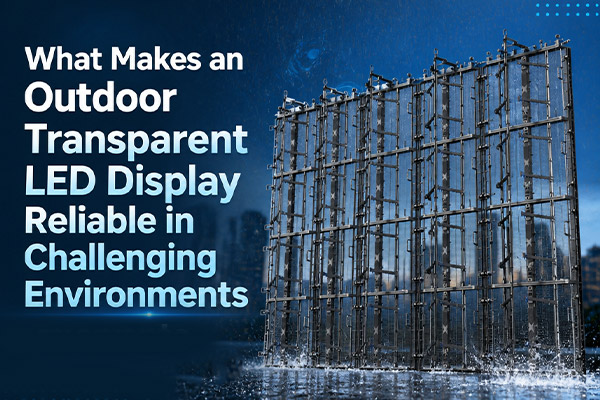
For this reason, reliability has become one of the most important considerations when selecting an outdoor transparent LED display. While image quality, brightness, and transparency remain essential factors, professional users are increasingly evaluating the overall engineering behind the display system, including structural strength, environmental protection, maintenance accessibility, and deployment efficiency. A reliable outdoor LED display system is not defined by a single component. It is the result of coordinated design across materials, mechanical structures, protection technologies, and operational processes.
Why Outdoor Environments Create Greater Challenges for Transparent LED Displays
Compared with indoor LED displays, outdoor transparent LED displays operate in a much more demanding environment. Outdoor installations are exposed to factors that can affect both electronic performance and structural stability. Weather conditions are one of the most obvious challenges. Rain, humidity, dust, and temperature changes can create long-term stress on electronic components. Without effective protection, moisture and contaminants may affect internal circuits and reduce the operational lifespan of the display.
This is especially important for rental and touring applications, where LED displays are frequently moved between different locations. A transparent LED display system used for concerts or festivals may experience different climates within a short period of time, requiring a high level of environmental adaptability. Wind is another critical factor in outdoor LED display applications. Unlike indoor installations, large outdoor LED screens are directly affected by wind pressure. As screen sizes continue to increase, the surface area exposed to wind also becomes larger, creating greater structural requirements.
For outdoor stage applications, the supporting structure is just as important as the LED cabinets themselves. The entire system needs to maintain stability while managing external forces caused by weather conditions and temporary installation environments. In addition, outdoor LED displays designed for touring productions face repeated transportation and assembly cycles. Equipment may be loaded, transported, installed, dismantled, and stored multiple times throughout a season. These repeated operations place additional requirements on cabinet structures, connection systems, and transportation solutions. Therefore, outdoor reliability is not only about surviving environmental conditions. It is also about maintaining consistent performance throughout the complete lifecycle of the display system.
The Key Factors Behind a Reliable Outdoor Transparent LED Display
Structural Design: The Foundation of Outdoor Reliability
The structural design of an outdoor transparent LED display plays a fundamental role in determining its long-term performance. Many users focus primarily on the LED modules and visual performance, but the supporting structure is equally important. The frame must provide sufficient strength while keeping the overall system lightweight enough for transportation and installation.
For large-scale outdoor LED applications, excessive weight can create additional challenges in logistics, rigging, and manpower requirements. However, reducing weight without proper engineering can affect stability and durability. This has encouraged the development of advanced materials and structural designs that achieve a better balance between strength and weight. Materials such as carbon fiber are increasingly being explored in professional LED display applications because of their high strength-to-weight ratio.
A well-designed carbon fiber LED display structure can help reduce overall system weight while maintaining the mechanical performance required for demanding environments. In addition to material selection, structural engineering must also consider how the display will be installed and operated. Outdoor LED systems used for concerts, festivals, and touring productions require structures that can support efficient deployment while maintaining reliability under changing conditions.
Environmental Protection: Creating Long-Term Protection for Electronic Components
Environmental protection is another essential element of outdoor LED display reliability. LED cabinets contain sensitive electronic components that need protection from moisture, dust, and external environmental factors. Traditional protection methods may provide basic resistance, but professional outdoor applications often require more advanced sealing and encapsulation technologies.
A high-performance outdoor transparent LED display system needs to create an effective barrier around internal components while maintaining serviceability for maintenance. Protection ratings such as IP65 have become an important reference in outdoor LED applications. An IP65 LED display provides protection against dust ingress and water exposure, making it suitable for demanding outdoor environments.
However, achieving reliable protection requires more than simply sealing the cabinet surface. Internal component protection, module design, and manufacturing processes all influence the overall durability of the display. For touring and rental LED display applications, environmental protection is especially important because equipment needs to perform consistently across different venues and weather conditions.
Wind Resistance: Engineering for Outdoor Stability
Wind resistance is one of the most important considerations for large outdoor LED displays. When a large LED screen is installed outdoors, wind pressure creates forces that act on both the display cabinet and the supporting structure. As the screen size increases, these forces become more significant. A reliable outdoor LED display design needs to consider factors such as structural strength, load distribution, connection reliability, and support systems.
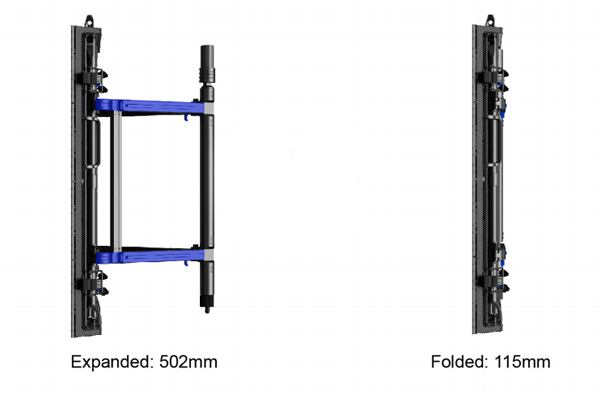
The goal is not simply to create a rigid structure. Professional engineering requires a balance between strength, flexibility, and durability. Controlled structural performance allows the system to handle temporary external forces while maintaining overall stability. For outdoor stage applications, this is particularly important because temporary structures must be installed efficiently while meeting safety requirements. Wind-resistant design has therefore become a key factor in evaluating professional outdoor LED screen solutions.
Transportation and Deployment: An Essential Part of Outdoor LED Reliability
For rental and touring productions, transportation is closely connected with reliability. A professional outdoor LED display system does not begin its working process at the venue. Its journey starts from storage, transportation, handling, installation, operation, and finally dismantling.
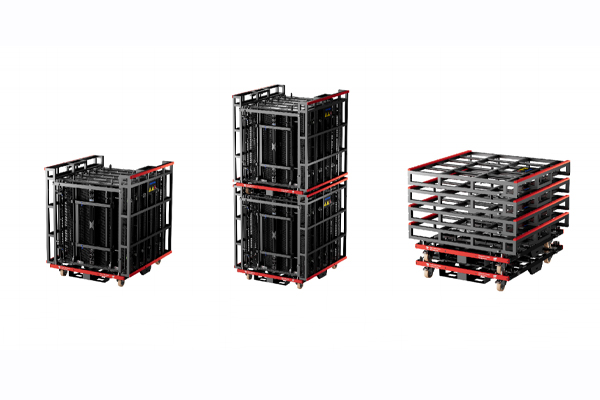
During this process, equipment may experience vibration, movement, and repeated handling. Efficient transportation solutions help reduce unnecessary physical stress while improving deployment organization. Modern LED display systems are increasingly adopting dedicated transportation solutions that allow cabinets to be stored, moved, and prepared more efficiently.
This is especially valuable for transparent LED displays for touring applications, where production teams need consistent workflows across multiple venues. A well-designed transportation system is therefore not simply an accessory. It is an important part of the overall LED deployment process.
How MAir Applies Engineering Principles for Outdoor Transparent LED Display Reliability
Based on the growing requirements of outdoor LED applications, MAir incorporates multiple engineering approaches focused on structural durability, environmental protection, and efficient deployment. One of the key foundations of MAir’s outdoor performance is its frame design. MAir adopts the industry’s first carbon fiber seamless one-piece molded frame, combining lightweight construction with structural durability.
The integrated carbon fiber frame helps reduce overall weight while maintaining the strength required for professional touring and outdoor applications. This lightweight yet durable design supports easier transportation and installation while providing reliable structural performance in demanding environments.
Beyond structural design, environmental protection is another important factor. MAir cabinet modules adopt proprietary Black Seal Potting technology, achieving full encapsulation and creating a protective barrier around the cabinet. With both front and rear protection rated at IP65, the system is designed to maintain stable performance under various outdoor conditions.
For large outdoor installations, wind resistance is also a critical consideration. MAir incorporates a metal hanging support rod with a wind-resistant frame design. The cabinet achieves an ultimate tensile strength of 51 kN, while the structure supports wind resistance up to 20 m/s and hanging applications up to 25 meters.
These engineering features help improve stability for outdoor events where structural reliability is essential. In addition, MAir integrates a dedicated transport solution to support efficient deployment. The 6-in-1 dolly system allows direct stacking, simplifying storage and transportation while improving space utilization for rental and touring operations.
By combining advanced structural materials, environmental protection technologies, wind-resistant engineering, and integrated transportation solutions, MAir demonstrates how modern transparent LED display systems can achieve reliable performance in challenging outdoor environments.
For concerts, festivals, and touring productions, the future of outdoor transparent LED displays is moving toward systems that deliver not only outstanding visual experiences but also stronger reliability, safer operation, and more efficient deployment.


+86-(0)731-84539619


Hunan Yestech Optoelectronic Co., Ltd. Terms of Service Privacy Policy Powered by szweb


